
BEIRUT, Lebanon — Hezbollah and its allies threatened to withdraw from Lebanon’s government on Wednesday, a move that would force it to dissolve and deepen a crisis over a United Nations-backed tribunal investigating the assassination of a former prime minister.
The threat returned Lebanon to familiar terrain, where Hezbollah and its foes have wrestled over the direction of the small Mediterranean country since Rafik Hariri was killed in a bombing along Beirut’s seafront in 2005. Twenty-two other people died in the attack. Since then, the tribunal has investigated his death and is now widely expected to indict members of Hezbollah, the country’s powerful Shiite Muslim movement.
Hezbollah has denied involvement and denounced the tribunal as an “Israeli project.” It has urged his son, Prime Minister Saad Hariri, to reject its findings. Mr. Hariri, who was in Washington on Wednesday to meet President Obama, has so far resisted the pressure.
A withdrawal by Hezbollah’s ministers and their allies from the government would mark the worst crisis in Lebanon since 2008, when an agreement reached in Qatar achieved a truce to end sectarian clashes that killed 81 people and brought Lebanon to the brink of a renewal of its 15-year civil war, which ended in 1990.
“We were committed but they were not,” said Ammar Houri, a lawmaker with Mr. Hariri’s bloc. He added that Mr. Hariri’s allies were meeting to decide the next step.
There was a sense of inevitability to the resignation threat. For months, Hezbollah has warned that it would not stand by as its members were accused of involvement in the assassination of Mr. Hariri’s father. Though it is technically part of the opposition, Hezbollah joined a unity government formed after elections in June 2009. It has emerged as the single most powerful force in the country, aided by its alliance with a powerful Christian general and the fracturing of its foes.
The decision to resign came after the collapse of talks between Saudi Arabia and Syria aimed at easing the political tension. The two countries have backed rival camps in Lebanon since 2005 and their initiative was seen across the political spectrum as the best chance to end the stalemate. But Tuesday night, Michel Aoun, a former general and Hezbollah’s Christian ally, announced the two sides were unable to reach an agreement.
“The initiative has ended with no result,” he said.
A government official, speaking on condition of anonymity, said that 11 ministers of the 30-member cabinet would resign on Wednesday, forcing the government to dissolve. He said the ministers would blame their resignation on the cabinet’s refusal to convene an emergency session to take a position on the international court.
The prospect of the government’s collapse sent a wave of anxiety through Lebanon, which has seen only brief periods of calm since Mr. Hariri’s killing and has often found itself perched between the competing agendas of Hezbollah allies _ Iran and Syria — and Mr. Hariri’s supporters, in particular the United States and Saudi Arabia.
“The Saudi-Syrian initiative was an attempt to prevent strife in the country,” said Walid Sukkariyeh, a lawmaker allied with Hezbollah’s bloc in Parliament.
A leading opposition newspaper, Al Akhbar, underlined the sense of unease with an editorial headlined, “The beginning of the unknown.”
Wednesday, January 12, 2011


Ivory Coast Forces Crack Down on Opposition

NEW YORK TIMES
ABIDJAN, Ivory Coast — The shouts came from the end of the dusty road: “They’re coming, they’re coming!”
Young men broke into a run, waving their arms in warning. Bursts of automatic gunfire crackled in the humid air behind them. In a flash, the wide, pitted road — crowded a moment before with angry residents — emptied. The inhabitants, all too accustomed to raids, had quickly scattered.
For the next 45 minutes, the neighborhood was raked by the pop-popping of gunfire and the sounds of explosions, delivered by the security forces of Laurent Gbagbo, the strongman who refuses to give up power despite losing a presidential election late last year. By the end of the assault, several people had been killed. Spent shells and trails of blood streaked the streets.
All the while, the United Nations, which has nearly ten thousand troops here, was nowhere to be seen. Though top United Nations officials have recently pledged to enforce their mandate in Ivory Coast robustly, promising to run roadblocks or other obstructions to protect civilians here, no peacekeepers arrived, much to the anger of residents.
“We sent a patrol there this morning; they were blocked,” said a United Nation’s military spokesman here, Lt. Col. Rais Shakib. “They blocked us completely,” he repeated, referring to the pro-Gbagbo forces.
So the shooting continued, uninterrupted. These muscled raiding parties — or “death squads,” as opposition officials call them — have been widely condemned by international officials, who warn of prosecutions and other consequences for attacks on civilians. But after a brief lull in recent weeks, the deadly raids appear to be back.
Alassane Ouattara, the man recognized as the winner of the election by the United Nations, the African Union and most governments around the world, calls the tactic a calculated bid to induce terror in the civilian strongholds of his supporters, helping suppress opposition to Mr. Gbagbo’s extended stay in office.
A Gbagbo government spokesman, Alain Toussaint, said the government forces had a legitimate mission. “The security forces received information that there were numerous armed persons in the neighborhood,” he said. “They proceeded there to conduct a security operation.”
Asked if any weapons had been found, he said “certainly,” adding that two of the government’s own police officers had been killed in the operation.
But of the scores of residents who scattered as the security forces swept in, only one appeared to be armed. Residents also spoke of repeatedly calling a United Nations emergency hot line for help, and getting no answer.
Colonel Shakib insisted that “the mission is always the same, to protect civilians.” But he also seemed to deflect some of the responsibility, saying Ivory Coast’s “security forces always have the first line of responsibility against wrongdoers” — a seeming non sequitur considering that the security forces were the ones to open fire on the neighborhood crowd.
Incensed that the United Nations — like other intergovernmental bodies — has called on him to step down, Mr. Gbagbo demanded that its forces leave the country. The United Nations refused, but its ability to operate has been severely hampered at times.
Still, United Nations officials have said they will not be deterred, and late last month the under secretary general for peacekeeping, Alain Le Roy, was quoted as saying, “We will ensure firmly, if someone obstructs us, that we cross through roadblocks because it is inadmissible that anybody prevent us from protecting civilians.”
On Tuesday at the United Nations, the secretary general, Ban Ki-moon, asked the Security Council to authorize an additional 2,000 military personnel for the peacekeeping forces, as well as three attack helicopters and a military hospital, because of the deteriorating situation. He cited “direct threats from regular and irregular forces loyal to former President Gbagbo.”
By late Wednesday morning, the raid in the opposition neighborhood here, known as Abobo, was ending. At regular intervals, automatic weapons shattered the stillness. Then there was a pause, and then the firing would start up again as residents hit the ground or pulled curious heads hastily back indoors.
Finally, the word sounded: the security forces appeared to be leaving. It was safe to come out again.
Residents said five people had been killed. The low concrete-block buildings of Abobo were pockmarked with bullet holes. Car windshields were shattered. Tank tracks were visible in the dust. Residents pointed with caution to an unexploded grenade still lying in the dirt street.
Six weeks ago, shortly after Mr. Gbagbo made it clear he did not intend to give up power, there were raids almost nightly in the pro-Ouattara neighborhoods in which the candidate’s supporters were shot, killed or kidnapped, residents say. The United Nations spoke of “massive violations” of human rights, including extrajudicial killings.
In other periods of violence here, earlier in the decade, Mr. Gbagbo’s government was also connected to the use of death squads, notably in a secret United Nations report that was subsequently suppressed by the world body, apparently for the sake of preserving a peace process.
In the last few weeks, as now stalemated diplomatic efforts got under way, there was a lull in the neighborhood attacks. But Wednesday’s operation appeared to signal a reprise.
“We were sleeping soundly, at around 2 a.m.,” said Ambroise Koné, a doctor who treated some of the wounded. Then a guardian, appointed to watch over barricades residents had erected, sounded the alert: The men in uniform had arrived.
“They fired on anything that moved,” Dr. Koné said.
Some of the attackers wore the uniforms of Mr. Gbagbo’s defense and security forces, residents said, while others were hooded and spoke in English, suggesting the possible presence of foreign mercenaries.
An army helicopter circled overhead, he and others said, dropping flares to indicate to the soldiers where young men were gathered. Residents spoke of being helpless in the face of what they described as an unprovoked attack on unarmed civilians by well-armed soldiers.
“Our neighborhood was invaded,” said Abdoulaye Bakayoko. “They attacked us with heavy weapons. They went inside the courtyards, and took people away. We are defenseless,” Mr. Bakayoko said.
Dr. Koné said, “We are appealing for help, to anybody.”
Ivory Coast Taking `All Necessary Measures' to Avoid $2.3 Billion Default
Ivory Coast’s Finance and Economy Ministry is “taking all necessary measures” to avoid defaulting on its $2.3 billion of bonds, according to a statement sent to bondholders. Prices for the debt jumped the most on record.
“The republic is in the process of taking all necessary measures so that the interest payment will be made before the expiration of the 30-day grace period,” according to the statement carrying Finance and Economy Minister Desire Dallo’s signature and dated yesterday. The letter is genuine, a Finance Ministry official said in an interview, declining to be identified because of ministry policy.
President Laurent Gbagbo’s administration will today discuss the payment of the coupon, Ahoua Don Mello, an adviser to Gbagbo, said in an interview from Abidjan, the commercial capital.
A political standoff over the disputed results of the Nov. 28 election between Gbagbo and his rival, Alassane Ouattara, sent yields on the West African country’s 2032 bonds to a record high of 17 percent earlier today.
The bonds jumped the most since being issued in April, gaining as much as 11 percent and trading 7.6 percent higher at 40.750 cents on the dollar as of 1:47 p.m. in Abidjan, according to generic prices on Bloomberg. The yield on the 2.5 percent bonds due December 2032 fell 142 basis points to 15.33 percent.
Caution
“Whilst no doubt it is a positive signal, we can only guess if they will be sincere in their efforts to rectify the situation,” said Phillip Blackwood, head of emerging markets at Sydbank A/S, Denmark’s fourth-largest bank, which received the statement at 7.30 a.m. London time. “If people were that confident they would pay on time then we would be trading with a 50 handle not a 40 handle.”
The world’s biggest cocoa-producing nation was due to pay $29 million in interest on Dec. 31 and has a 30-day grace period from that date. “In the light of the difficulties experienced by the country, the Republic of Cote d’Ivoire has not yet been able to make payment of the coupon,” according to the statement sent to bondholders.
“It’s a good sign, but we have to be a little bit cautious because in principle they are cut off from the Ivorian accounts with the central bank, so it’s hard to see how they will make the payments in practical terms,” Samir Gadio, a London-based emerging-market strategist at Standard Bank Plc, said in a telephone interview today.
Access to Funds
The Central Bank of West African States recognized Ouattara as Ivory Coast’s president last month, giving him control over state reserves previously governed by Gbagbo. Ouattara, 69, recognized by the United Nations, the U.S. and African leaders as victor of the election, is a former deputy managing director at the International Monetary Fund.
“So far, Desire Dallo, as the minister of finance, does not have any other option other than taking into consideration the commitments taken in the past,” Gbagbo adviser Don Mello said. “These commitments can’t be modified as long as a new budget has not been voted on.”
The Ivory Coast defaulted on its Brady bonds in 2000 after it failed to meet a $10 million principal payment deadline. The nation issued new Eurobonds at a yield of 10.181 percent in April last year to replace the earlier debt.
Political Will
“With Ivory Coast the issue was never solvency, or perhaps even liquidity, but political willingness to pay by the incumbent Gbagbo regime,” Timothy Ash, head of emerging-market strategy at Royal Bank of Scotland Group Plc, said in an e-mail today. “The delay had more to do with the incumbent president trying to heap more pressure on the international community to reach a deal in the standoff with the opposition.”
The United Nations estimates as many as 210 people have been killed in violence since the election. In the past three weeks, about 16,000 people have fled villages in the west of the country, where the political crisis has exacerbated ethnic tensions, according to the Humanitarian Country Team, a group of non-governmental and UN organizations.
Ouattara said he would consider a “wide composite cabinet” including members of Gbagbo’s party, Youssoufou Bamba, the country’s envoy to the UN, said yesterday in an interview with the British Broadcasting Corp.’s Hardtalk program. The army, which supports Gbagbo, has blockaded streets around the Golf Hotel in Abidjan, where Ouattara has established his administration.
Military Option
Kenyan Prime Minister Raila Odinga, the African Union’s envoy, will return to Ivory Coast this week in a second effort to find a resolution to the conflict, according to an e-mail from his Nairobi-based office yesterday. Nigerian President Olusegun Obasanjo made an unannounced visit to the country on Jan. 8 to mediate.
Ouattara refused to enter talks with Gbagbo last week, telling the BBC that a military intervention led by the Economic Community of West African States would come “sooner than you think.” Ghana said Jan. 7 it wouldn’t contribute troops to a mission in the country.
“I do not think this military option is going to bring peace in Cote d’Ivoire,” Ghanaian President John Atta Mills told reporters in the capital, Accra. “I don’t want to be saddled with problems we cannot solve. We have our own internal problems.”
“The republic is in the process of taking all necessary measures so that the interest payment will be made before the expiration of the 30-day grace period,” according to the statement carrying Finance and Economy Minister Desire Dallo’s signature and dated yesterday. The letter is genuine, a Finance Ministry official said in an interview, declining to be identified because of ministry policy.
President Laurent Gbagbo’s administration will today discuss the payment of the coupon, Ahoua Don Mello, an adviser to Gbagbo, said in an interview from Abidjan, the commercial capital.
A political standoff over the disputed results of the Nov. 28 election between Gbagbo and his rival, Alassane Ouattara, sent yields on the West African country’s 2032 bonds to a record high of 17 percent earlier today.
The bonds jumped the most since being issued in April, gaining as much as 11 percent and trading 7.6 percent higher at 40.750 cents on the dollar as of 1:47 p.m. in Abidjan, according to generic prices on Bloomberg. The yield on the 2.5 percent bonds due December 2032 fell 142 basis points to 15.33 percent.
Caution
“Whilst no doubt it is a positive signal, we can only guess if they will be sincere in their efforts to rectify the situation,” said Phillip Blackwood, head of emerging markets at Sydbank A/S, Denmark’s fourth-largest bank, which received the statement at 7.30 a.m. London time. “If people were that confident they would pay on time then we would be trading with a 50 handle not a 40 handle.”
The world’s biggest cocoa-producing nation was due to pay $29 million in interest on Dec. 31 and has a 30-day grace period from that date. “In the light of the difficulties experienced by the country, the Republic of Cote d’Ivoire has not yet been able to make payment of the coupon,” according to the statement sent to bondholders.
“It’s a good sign, but we have to be a little bit cautious because in principle they are cut off from the Ivorian accounts with the central bank, so it’s hard to see how they will make the payments in practical terms,” Samir Gadio, a London-based emerging-market strategist at Standard Bank Plc, said in a telephone interview today.
Access to Funds
The Central Bank of West African States recognized Ouattara as Ivory Coast’s president last month, giving him control over state reserves previously governed by Gbagbo. Ouattara, 69, recognized by the United Nations, the U.S. and African leaders as victor of the election, is a former deputy managing director at the International Monetary Fund.
“So far, Desire Dallo, as the minister of finance, does not have any other option other than taking into consideration the commitments taken in the past,” Gbagbo adviser Don Mello said. “These commitments can’t be modified as long as a new budget has not been voted on.”
The Ivory Coast defaulted on its Brady bonds in 2000 after it failed to meet a $10 million principal payment deadline. The nation issued new Eurobonds at a yield of 10.181 percent in April last year to replace the earlier debt.
Political Will
“With Ivory Coast the issue was never solvency, or perhaps even liquidity, but political willingness to pay by the incumbent Gbagbo regime,” Timothy Ash, head of emerging-market strategy at Royal Bank of Scotland Group Plc, said in an e-mail today. “The delay had more to do with the incumbent president trying to heap more pressure on the international community to reach a deal in the standoff with the opposition.”
The United Nations estimates as many as 210 people have been killed in violence since the election. In the past three weeks, about 16,000 people have fled villages in the west of the country, where the political crisis has exacerbated ethnic tensions, according to the Humanitarian Country Team, a group of non-governmental and UN organizations.
Ouattara said he would consider a “wide composite cabinet” including members of Gbagbo’s party, Youssoufou Bamba, the country’s envoy to the UN, said yesterday in an interview with the British Broadcasting Corp.’s Hardtalk program. The army, which supports Gbagbo, has blockaded streets around the Golf Hotel in Abidjan, where Ouattara has established his administration.
Military Option
Kenyan Prime Minister Raila Odinga, the African Union’s envoy, will return to Ivory Coast this week in a second effort to find a resolution to the conflict, according to an e-mail from his Nairobi-based office yesterday. Nigerian President Olusegun Obasanjo made an unannounced visit to the country on Jan. 8 to mediate.
Ouattara refused to enter talks with Gbagbo last week, telling the BBC that a military intervention led by the Economic Community of West African States would come “sooner than you think.” Ghana said Jan. 7 it wouldn’t contribute troops to a mission in the country.
“I do not think this military option is going to bring peace in Cote d’Ivoire,” Ghanaian President John Atta Mills told reporters in the capital, Accra. “I don’t want to be saddled with problems we cannot solve. We have our own internal problems.”
Tuesday, January 11, 2011
Policeman shoots Christian dead in southern Egypt

CAIRO – An off-duty policeman boarded a train and opened fire on Tuesday, killing a 71-year-old Christian man and wounding five Christians, mostly women, the Interior Ministry said in a statement, sparking new demonstrations in southern Egypt.
There are fears the attack could ignite a new wave of Christian protests by a community still traumatized by a New Year's suicide attack on a church that killed at least 21 worshippers as they were leaving Mass.
Soon after the attack, hundreds of angry Copts gathered outside the hospital where the wounded were being treated in the central Egyptian province of Minya and pelted the police with stones.
No motive was immediately known for the shooting which came less than two weeks after the suicide bomber blew himself up outside the church in the Mediterranean city of Alexandria, sparking three days of fierce riots by Christians.
The ministry statement identified the policeman as Amer Ashour Abdel-Zaher, a 23-year-old Muslim, and said he boarded the Cairo-bound train at the town of Samalout in Minya province and opened fire on the passengers with a handgun.
It was not immediately clear if he was aware his victims were all Christian, however Christian women, who made up four of the five wounded, stand out in the conservative south since they would probably not be wearing headscarves as most Muslim women do.
The statement added that Abdel-Zaher, who was not wearing a uniform, was on his way to work at a town near Samalout. Police arrested him at his nearby home after he fled the scene and he was being questioned, according to the ministry statement.
The train originated in Assiut which, like Samalout, is home to a substantial Christian community.
Shooting attacks against Christians occasionally take place in Egypt's impoverished south, usually over commercial disputes, church building or allegations of cross-sectarian relationships.
In January 2010, gunmen opened fire on worshippers leaving a Coptic Christmas Eve church service in southern Egypt, killing six Christians and a Muslim guard.
Many Christians charge that the authorities are not doing enough to protect them and in fact allege some members of the security services turn a blind eye to anti-Christian incidents.
The attack comes as Egypt was bristling at international expressions of concern over the safety of its Christian population and recalled its ambassador to the Vatican following comments by Pope Benedict XVI.
In a speech Monday, Benedict cited recent attacks on Christians in Egypt, Iraq and Nigeria, and said governments must take effective measures to protect religious minorities.
Hossam Zaki, Egypt's Foreign Ministry spokesman, described Benedict's remarks as "unacceptable" and charged him with interfering in the country's internal affairs.
"Egypt will not allow non-Egyptians to interfere in its internal affairs under any pretext," he said.
Sheik Ahmed el-Tayyib, the imam of the Al-Azhar, the premier institute of Islamic learning in the Sunni Muslim world, also blasted the Pope's remarks.
"Protection of Christians is an internal affair and should be carried out by the governments as they (the Christians) are their citizens like other citizens," he said in a statement.
President Hosni Mubarak has repeatedly said that the government will do its utmost to protect Egypt's Christians and has accused foreign groups of being behind the New Year's church attack.
The New Year's suicide attack on the church reopened long festering wounds in a Christian community that says its members feel like second class citizens in their own country due to widespread discrimination.
Coptic Christians demonstrated around the country, including Assiut, in the aftermath of the bombing and called for better protection and equal rights.
Christians make up about 10 percent of Egypt's nearly 80 million people
Iran rounds up Christians in crackdown
DUBAI, United Arab Emirates – Iran has arrested about 70 Christians since Christmas in a crackdown that demonstrates the limits of religious tolerance by Islamic leaders who often boast they provide room for other faiths.
The latest raids have targeted grass-roots Christian groups Iran describes as "hard-liners" who pose a threat to the Islamic state. Authorities increasingly view them with suspicions that range from trying to convert Muslims to being possible footholds for foreign influence.
Christian activists claim their Iranian brethren are being persecuted simply for worshipping outside officially sanctioned mainstream churches.
Caught in the middle is the small community of Iranian Christians who get together for prayer and Bible readings in private residences and out of sight of authorities. They are part of a wider "house church" movement that has taken root in other places with tight controls on Christian activities such as China and Indonesia.
Iran's constitution gives protected status to Christians, Jews and Zoroastrians, but many religious minorities sense growing pressures from the Islamic state as hard-edged forces such as the powerful Revolutionary Guard exert more influence. There are few social barriers separating Muslims and Iran's religious minorities such as separate neighborhoods or universities. But they are effectively blocked from high government and military posts.
Iran has claimed as a point of pride that it makes space for other religions. It reserves parliament seats for Jewish and Christian lawmakers and permits churches — Roman Catholic, Armenian Orthodox and others — as well as synagogues and Zoroastrian temples that are under sporadic watch by authorities. Religious celebrations are allowed, but no political messages or overtones are tolerated.
In past years, authorities have staged arrests on Christians and other religious minorities, but the latest sweeps appears to be among the biggest and most coordinated.
In the West, the followers are drawn to house churches because of the intimate sense of religious fellowship and as an alternative to established denominations. In places such as Iran, however, there also is the effort to avoid monitoring of sanctioned churches from Islamic authorities — who have kept closer watch on religious minorities since the chaos after hard-line President Mahmoud Ahmadinejad's disputed election in 2009.
Groups monitoring Christian affairs in the Islamic world say Iranian authorities see the unregulated Christian gatherings as both a potential breeding ground for political opposition and suspect they may try to convert Muslim in violation of Iran's strict apostasy laws — which are common throughout the Muslim world and have at times fed extremist violence against Christians and others.
Tehran Governor Morteza Tamadon described the Christians as "hard-line" missionaries who have "inserted themselves into Islam like a parasite," according to the official Islamic Republic News Agency. He also suggested that the Christians could have links to Britain — an accusation within Iran that refers to political opposition groups Tehran claims are backed by the West.
The crackdown by Iran resonates forcefully across the Middle East at a time when other Christian communities feel under siege following deadly attacks against churches in Egypt and Iraq — bloodshed that was noted Monday by Pope Benedict XVI in an appeal for protection of religious minorities.
The suicide blast in Egypt's Mediterranean port of Alexandria on Jan. 1, which killed 21 Coptic Christian worshippers, followed threats by al-Qaida in Iraq over claims that Coptic leaders forced two women who converted to Islam to return to Christianity — allegations that church leaders deny.
"It's the nature of the house churches that worries Iran. It's all about possible converts," said Fleur Brading, a researcher for Middle East and North Africa at Christian Solidarity Worldwide, a British-based group the follows Christian rights issues around the world. "It's a very specific and pinpoint strike by Iran."
Iran's religious minorities represent about 2 percent of the population and include communities with deep connections to their faiths. Iran's ethnic Armenian minority dates back to early Christianity, and the Jewish celebration of Purim is built around the story of the Persian-born Esther.
Even Iran's Islamic Revolution could not stamp out the influence of the pre-Muslim Zoroastrian faith, including its new year's holiday Norooz in March.
The wave of arrests began Christmas morning and since then, opposition websites have reported 70 Christians arrested, including those regarded as pastors in the house church movement. Many were later released, but the reports say more than a dozen remain in detention and officials have hinted more raids are possible.
It's still unclear what charges could be brought against the jailed Christians. But allegations of trying to convert Muslims could bring a death sentence.
Brading, however, expects Iranian authorities could opt for political charges rather than religious-linked allegations to soften a possible international outcry. Iran is already struggling against a campaign opposing the death-by-stoning for an Iranian woman convicted of adultery as well as international pressure over its nuclear program.
"The use of the word missionaries instead of evangelicals is an intentional move by the government," she said. "As evangelicals, they are a group entitled to their faith. As missionaries, they are enemies of the state seeking to corrupt its people."
In recent months, some members of Iran's Armenian community also have been detained on unspecified allegations of working to undermine the state, the Iranian Christian News Agency reported. Iranian officials have not given details of the reported detentions.
On Friday, a U.S. watchdog group on religious tolerance expressed concern over the recent arrests.
"What's most troubling about this wave of detentions is the fact that Iran is continuing its recent trend of targeting evangelical Christians, which they've been doing for years, and also leaders from the recognized and protected Armenian Christian community," said Leonard Leo, chairman of the U.S. Commission on International Religious Freedom, an independent government advisory panel.
Iranian authorities have come down hard on religious groups seen as threats to Islam, including the Baha'is whose faith was founded in the 19th century by a Persian nobleman considered a prophet by his followers. Baha'is are not recognized as official religious minority in Iran's Constitution.
There are no accurate figures on the number of Christians in the "house church" movement or followers outside established denominations. But the manager of the Iranian Christian News Agency, Saman Kamvar, said authorities likely perceive some kind of challenge to the religious status quo and are "feeling insecure."
Kamvar attributes the stepped up raids against Christians to comments last month by Iran's Supreme Leader Ayatollah Ali Khamenei denouncing the growth of private house churches.
"This, in my opinion, was a green light to the other authorities to crack down on them," Kamvar said from Canada, where he now lives.
The latest raids have targeted grass-roots Christian groups Iran describes as "hard-liners" who pose a threat to the Islamic state. Authorities increasingly view them with suspicions that range from trying to convert Muslims to being possible footholds for foreign influence.
Christian activists claim their Iranian brethren are being persecuted simply for worshipping outside officially sanctioned mainstream churches.
Caught in the middle is the small community of Iranian Christians who get together for prayer and Bible readings in private residences and out of sight of authorities. They are part of a wider "house church" movement that has taken root in other places with tight controls on Christian activities such as China and Indonesia.
Iran's constitution gives protected status to Christians, Jews and Zoroastrians, but many religious minorities sense growing pressures from the Islamic state as hard-edged forces such as the powerful Revolutionary Guard exert more influence. There are few social barriers separating Muslims and Iran's religious minorities such as separate neighborhoods or universities. But they are effectively blocked from high government and military posts.
Iran has claimed as a point of pride that it makes space for other religions. It reserves parliament seats for Jewish and Christian lawmakers and permits churches — Roman Catholic, Armenian Orthodox and others — as well as synagogues and Zoroastrian temples that are under sporadic watch by authorities. Religious celebrations are allowed, but no political messages or overtones are tolerated.
In past years, authorities have staged arrests on Christians and other religious minorities, but the latest sweeps appears to be among the biggest and most coordinated.
In the West, the followers are drawn to house churches because of the intimate sense of religious fellowship and as an alternative to established denominations. In places such as Iran, however, there also is the effort to avoid monitoring of sanctioned churches from Islamic authorities — who have kept closer watch on religious minorities since the chaos after hard-line President Mahmoud Ahmadinejad's disputed election in 2009.
Groups monitoring Christian affairs in the Islamic world say Iranian authorities see the unregulated Christian gatherings as both a potential breeding ground for political opposition and suspect they may try to convert Muslim in violation of Iran's strict apostasy laws — which are common throughout the Muslim world and have at times fed extremist violence against Christians and others.
Tehran Governor Morteza Tamadon described the Christians as "hard-line" missionaries who have "inserted themselves into Islam like a parasite," according to the official Islamic Republic News Agency. He also suggested that the Christians could have links to Britain — an accusation within Iran that refers to political opposition groups Tehran claims are backed by the West.
The crackdown by Iran resonates forcefully across the Middle East at a time when other Christian communities feel under siege following deadly attacks against churches in Egypt and Iraq — bloodshed that was noted Monday by Pope Benedict XVI in an appeal for protection of religious minorities.
The suicide blast in Egypt's Mediterranean port of Alexandria on Jan. 1, which killed 21 Coptic Christian worshippers, followed threats by al-Qaida in Iraq over claims that Coptic leaders forced two women who converted to Islam to return to Christianity — allegations that church leaders deny.
"It's the nature of the house churches that worries Iran. It's all about possible converts," said Fleur Brading, a researcher for Middle East and North Africa at Christian Solidarity Worldwide, a British-based group the follows Christian rights issues around the world. "It's a very specific and pinpoint strike by Iran."
Iran's religious minorities represent about 2 percent of the population and include communities with deep connections to their faiths. Iran's ethnic Armenian minority dates back to early Christianity, and the Jewish celebration of Purim is built around the story of the Persian-born Esther.
Even Iran's Islamic Revolution could not stamp out the influence of the pre-Muslim Zoroastrian faith, including its new year's holiday Norooz in March.
The wave of arrests began Christmas morning and since then, opposition websites have reported 70 Christians arrested, including those regarded as pastors in the house church movement. Many were later released, but the reports say more than a dozen remain in detention and officials have hinted more raids are possible.
It's still unclear what charges could be brought against the jailed Christians. But allegations of trying to convert Muslims could bring a death sentence.
Brading, however, expects Iranian authorities could opt for political charges rather than religious-linked allegations to soften a possible international outcry. Iran is already struggling against a campaign opposing the death-by-stoning for an Iranian woman convicted of adultery as well as international pressure over its nuclear program.
"The use of the word missionaries instead of evangelicals is an intentional move by the government," she said. "As evangelicals, they are a group entitled to their faith. As missionaries, they are enemies of the state seeking to corrupt its people."
In recent months, some members of Iran's Armenian community also have been detained on unspecified allegations of working to undermine the state, the Iranian Christian News Agency reported. Iranian officials have not given details of the reported detentions.
On Friday, a U.S. watchdog group on religious tolerance expressed concern over the recent arrests.
"What's most troubling about this wave of detentions is the fact that Iran is continuing its recent trend of targeting evangelical Christians, which they've been doing for years, and also leaders from the recognized and protected Armenian Christian community," said Leonard Leo, chairman of the U.S. Commission on International Religious Freedom, an independent government advisory panel.
Iranian authorities have come down hard on religious groups seen as threats to Islam, including the Baha'is whose faith was founded in the 19th century by a Persian nobleman considered a prophet by his followers. Baha'is are not recognized as official religious minority in Iran's Constitution.
There are no accurate figures on the number of Christians in the "house church" movement or followers outside established denominations. But the manager of the Iranian Christian News Agency, Saman Kamvar, said authorities likely perceive some kind of challenge to the religious status quo and are "feeling insecure."
Kamvar attributes the stepped up raids against Christians to comments last month by Iran's Supreme Leader Ayatollah Ali Khamenei denouncing the growth of private house churches.
"This, in my opinion, was a green light to the other authorities to crack down on them," Kamvar said from Canada, where he now lives.
Youth Advised Against Get-Rich-Quick Attitude
Daily Graphic
Ghanaian youth have been urged to shun the get-rich quick attitude that has crept into the Ghanaian society and driven many of them into armed robbery and social ills like Internet fraud.
The First Lady, Mrs Ernestina Naadu Mills, gave the advice at the 20th anniversary celebration of the Global Evangelical Students and Associate Ministry (GESAM) in Accra on Sunday.
Quoting a Daily Graphic publication of December 2, 2010, she said: “It is sad to note that Ghana is ranked among the top 10 countries in the world where the crime popularly known as 419 is most prevalent.”
GESAM is an umbrella body for students of the Global Evangelical Church (GEC) and their associated ministries and currently boasts 2,300 members in 39 educational institutions.
The group has been at the forefront of evangelism in the church, winning souls in addition to leadership training programmes for its members.
The annual event, which was on the theme: “The role of the Christian intellectual in transforming the Nation”, serves as a platform to deliberate on issues affecting the students on their various campuses, their achievements and challenges and to plan the way forward for the ensuing year.
The First Lady, therefore, told the youth to strive to contribute to the ‘Better Ghana’ agenda in their own small way.
“To transform this nation, you must use your energy identify developmental problems in your communities and find ways to solve them.
This is the only way you can add value to all that you are studying in school,” the first lady stated.
She said it was high time the Christian youth rose to the challenge of leading by example, adding that “in Christ, you have been called to a life of integrity, honesty, humility, respect for the elderly and care for the environment.”
Mrs Mills, who donated GH¢5,000 towards the activities of the group, said churches in the country had a crucial role to play in the attainment of the Millennium Development Goals (MDGs) by 2015.
She said the MDGs were a call to help reduce poverty, ensure universal primary education, combat HIV and AIDS, malaria and other diseases and also sustain the environment.
Mrs Mills urged the media to realise the fact that the youth, who remain the future leaders of the country, were the most vulnerable consumers of negative programmes telecast daily.
She commended the GEC for its role, not only in advancing the welfare of its members but also contributing to the educational and health sectors of the country.
The Chaplain of GESAM, Rev. Dr Nyuieko Avotri, in a welcoming address, said the group achieved its present stature because some people had laid down their lives to support the positive nurturing of the youth so that they (the youth) would grow in the knowledge and fear of God.
Gunmen kill policeman in northern Nigeria church attack
KANO, Nigeria (AFP) – Gunmen opened fire on police guarding Christian worshippers at a church in northern Nigeria, killing one and wounding two others in the latest such attack in the region, police said Monday.
The Sunday night attack occurred in Maiduguri, where suspected members of an Islamist sect have carried out a series of killings in recent months, including Christmas Eve attacks on churches.
Police, however, could not say who was behind the shootings.
"Unknown gunmen arrived in a tinted car around 8:00 pm and opened fire on two policemen guarding the church," said police spokesman Lawal Abdullahi.
"A fire exchange took place for about 10 minutes between the policemen and the assailants. Worshippers were in the church praying at the time of the attack."
He said "a policeman was killed and two other people, including the church security guard, were seriously injured."
The gunmen fled, though arrests were made in connection with the attack, said Abdullahi.
Suspected members of an Islamist sect that launched an uprising last year have carried out a series of attacks in northern Nigeria in recent months.
The group claimed responsibility for attacks on three churches in Maiduguri on Christmas Eve that left six people dead.
The Sunday night attack occurred in Maiduguri, where suspected members of an Islamist sect have carried out a series of killings in recent months, including Christmas Eve attacks on churches.
Police, however, could not say who was behind the shootings.
"Unknown gunmen arrived in a tinted car around 8:00 pm and opened fire on two policemen guarding the church," said police spokesman Lawal Abdullahi.
"A fire exchange took place for about 10 minutes between the policemen and the assailants. Worshippers were in the church praying at the time of the attack."
He said "a policeman was killed and two other people, including the church security guard, were seriously injured."
The gunmen fled, though arrests were made in connection with the attack, said Abdullahi.
Suspected members of an Islamist sect that launched an uprising last year have carried out a series of attacks in northern Nigeria in recent months.
The group claimed responsibility for attacks on three churches in Maiduguri on Christmas Eve that left six people dead.
Machete attack in central Nigeria leaves 13 dead
JOS, Nigeria – A community leader says men armed with rifles and machetes killed 13 people in an attack on a village in central Nigeria.
The Riyom local government chairman said Tuesday three homes were attacked in the Christian village of Kuru Station around midnight on Monday. Simon Mwaekwom says villagers told him the attackers included soldiers and that soldiers stationed nearby refused to help.
He says the attackers killed children and adults and burned down their houses. He says three people were injured.
The village sits south of Jos, the epicenter of religious violence in Nigeria's "middle belt," where dozens of ethnic groups vie for control of fertile lands. Politics, jobs and land often motivate violence that falls along religious lines.
The Riyom local government chairman said Tuesday three homes were attacked in the Christian village of Kuru Station around midnight on Monday. Simon Mwaekwom says villagers told him the attackers included soldiers and that soldiers stationed nearby refused to help.
He says the attackers killed children and adults and burned down their houses. He says three people were injured.
The village sits south of Jos, the epicenter of religious violence in Nigeria's "middle belt," where dozens of ethnic groups vie for control of fertile lands. Politics, jobs and land often motivate violence that falls along religious lines.
UN peacekeepers flee Ivory Coast neighborhood

ABIDJAN, Ivory Coast – U.N. peacekeepers retreated from a neighborhood where security forces loyal to incumbent leader Laurent Gbagbo had opened fire Tuesday, turning around at least nine U.N. vehicles after dozens of angry young men built a road blockade out of a table and sticks.
Peacekeepers patrolling the streets of Abidjan have come under growing threat as tensions escalate over the Nov. 28 election. One U.N. peacekeeper was wounded with a machete last month when a crowd in a pro-Gbagbo neighborhood attacked a convoy and set a U.N. vehicle on fire.
Gbagbo, who refuses to leave office despite international condemnation and a possible regional military ouster, has accused the U.N. of bias since it endorsed results from the electoral commission that declared Alassane Ouattara the winner.
Gbagbo maintains control of the country's military, and human rights groups accuse his security forces of abducting and killing hundreds of political opponents since the vote.
On Tuesday, military trucks descended upon a neighborhood known as PK 18 hours after residents there described killing two police officers who were conducting raids in the area. The district overwhelmingly voted for Gbagbo's rival in the election.
Marco Boubacar, head of the New Forces rebels who are allied to Ouattara, said people attacked the police officers with their bare hands.
"We were able to take down two men in uniform," he said.
The two deaths could not be independently confirmed, but other witnesses said they also had seen the police officers' bodies.
The area is not far from the site where Charles Ble Goude, the leader of a pro-Gbagbo youth group, is expected to hold a rally Tuesday afternoon. Some describe the hardline Young Patriots as an armed militia.
Goude, who was placed on a United Nations sanctions list in 2006 for his role in inciting violence, has been leading daily rallies, gathering thousands of pro-Gbagbo youth to warn that there will be no peace if Gbagbo is forced out.
"They shouldn't kid themselves and imagine that they can come and remove (Gbagbo) like some sort of orphan ... Because in every Ivorian there is a Gbagbo," Goude told The Associated Press on Monday. "Do they want to govern an Ivory Coast cemetery?"
Meanwhile Tuesday, the U.N. refugee agency said 25,000 Ivorian civilians have now fled to neighboring Liberia since the disputed election. A spokesman for the U.N. High Commissioner for Refugees said 600 more refugees are arriving in Liberia daily.
Adrian Edwards told reporters in Geneva on Tuesday that the United Nations is setting up a refugee camp for 18,000 people in the eastern Liberian town of Bahn.
Strains emerge between Netanyahu, foreign minister

JERUSALEM – Prime Minister Benjamin Netanyahu rebuked his combative foreign minister on Tuesday for attacking members of the Israeli leader's Likud party, pointing to growing strains within Israel's coalition government.
In a rambling press conference, Avigdor Lieberman criticized Likud leaders for opposing an initiative to investigate Israeli human rights groups critical of the government. He said it was a "strange spectacle" to see Likud members protecting groups that he described as "terrorist collaborators."
Netanyahu's office said the prime minister "utterly rejects" the comments, reminding Lieberman that Likud is a "democratic and pluralistic party and not a dictatorship of one opinion."
Lieberman, who immigrated to Israel from the former Soviet Union, leads the Yisrael Beitenu party, which made strong gains in 2009 elections with a nationalist message that, among other things, questioned the loyalty of Israel's Arab minority.
Lieberman more recently has turned his attention to Israeli human rights groups, pushing parliament to launch an inquiry into funding sources of organizations deemed hostile to Israel. In particular, he is targeting groups that have helped seek prosecution of Israeli soldiers for alleged war crimes during battles against Palestinian militants.
Critics say Lieberman's proposal would stifle dissent and limit democracy. Several senior Likud members reject the move, saying it is not the parliament's job to impede public debate.
Tuesday's comments were not the first time Netanyahu has had to rein in his cantankerous foreign minister.
Lieberman has embarrassed Netanyahu with his repeated skepticism on the chances of reaching peace, including a high-profile speech at the United Nations General Assembly last September in which he contradicted Netanyahu's stated goal of reaching a final peace deal in the coming year.
Lieberman has also proved a distraction with his repeated attacks on Arab lawmakers, and by pushing through a law that would require non-Jewish immigrants to take a loyalty oath before becoming citizens. That proposal was widely seen as racist and anti-Arab because it would not require Jewish immigrants to take the oath.
In other challenges facing the government, the centrist Labor Party last week threatened to pull out of the governing coalition within months if no significant progress was made in peace talks with Palestinians.
On Tuesday, Labor lawmaker Daniel Ben Simon said he was leaving the party and becoming an independent in parliament. He said the step was to protest Labor's continued presence in the coalition
Algeria and Tunisia: Protests Threaten Repressive Regimes
The new year has brought a wave of protests and violence against two U.S.-friendly authoritarian Arab regimes in North Africa. Riots in Algeria over rising food prices last weekend reportedly left five people dead and some 800 injured, while police arrested more than 1,000 people in their effort to crack down on protestors. At the same time, weeks of unrest and anger at high unemployment came to a head in neighboring Tunisia, with security forces killing at least 14 civilians protesting in a number of the country's poorer towns. Hundreds of others were hurt as police fired tear gas and live ammunition into crowds, prompting condemnation by the E.U. and human-rights groups.
A call from Tunisia's marginalized political opposition for a "cease-fire" fell on deaf ears. Instead, the regime on Jan. 10 ordered all schools and universities shut to thwart further student mobilization. Algeria, too, was eager to deny opponents platforms for protest, suspending all the country's professional soccer games to prevent fans congregating. (Watch TIME's video of desert refugees in Algeria awaiting recognition.)
For years, Tunisia has been one of the more stable countries in the region, with many citizens accepting their regime's authoritarianism in exchange for guarantees of greater prosperity. But economic decline there and continued hardship in Algeria have left both countries facing simmering resentment, particularly from younger people whose job prospects are grim. "The riots are a sign that young people in the region are losing hope," says Haim Malka, senior fellow at the Middle East Program at the Center for Strategic and International Studies in Washington, D.C. "They are getting increasingly frustrated by the lack of opportunities and accountability in their societies."
Troubles in Tunisia began after Dec. 17, when Mohammed Bouazizi, an unemployed 26-year-old college graduate, poured gasoline over his body and set himself ablaze in a public square in the town of Sidi bou Zid. Bouazizi had allegedly been beaten and humiliated by police officers while trying to hawk vegetables without an adequate license. His self-immolation - Bouazizi died of his wounds on Jan. 5 - struck a nerve among Tunisians, some 14% of whom are unemployed. Demonstrations kicked off nationwide, involving students and labor unions, and even a lawyers' strike. Apart from a few conciliatory gestures, the government of President Zine el-Abidine Ben Ali reacted aggressively, arresting dissidents (including a popular 22-year-old rapper nicknamed "El General") and gunning down others, while doing its best to muzzle the press and civil society. The Committee to Protect Journalists alleges widespread censoring of the Internet and monitoring of all Tunisian-based Facebook accounts; in solidarity with the protesters, the global "hacktivist" group Anonymous, which had recently rallied behind WikiLeaks, managed to temporarily shut down a number of state-run Tunisian websites on Jan. 2. (Read "Tunisia: The Price of Prosperity.")
"Though the spark seems to have been economic issues, these are protests against political systems that are totally frozen," says Elliott Abrams, a fellow at the Council of Foreign Relations who was the deputy national security adviser handling the Middle East and North Africa in the Administration of President George W. Bush. "Nothing changes. There's little to no freedom of the press, and each election is an even worse charade than the other."
In Algeria, some three-quarters of the population is younger than 30. Few experienced the savage violence of a civil war between the government and Islamists in the 1990s that followed the military's cancellation of elections that the Islamists looked set to win, let alone the storied armed struggle that won independence from France in 1962. Yet, these experiences are still invoked to burnish the credentials of the military-backed regime of President Abdelaziz Bouteflika. In the wake of the riots, the Algerian government attempted to ease the situation with the promise of food subsidies and tax relief. But those measures may be thin paper over the widening cracks emerging in Algerian society. Despite the country's abundance of natural-gas wealth, millions of Algerians remain in poverty, with large slums surrounding the capital city, Algiers. According to a report by Dubai-based Al Arabiya TV, some young protestors flung animal bones at government buildings in the major city of Oran, "because," said one, "[the government] has left nothing but bones for us." (Read about the kidnapping threat to foreigners in North Africa.)
Whereas the problem in Algeria is "primarily institutional," argues Abrams, "Tunisia is a more old-fashioned dictatorship, where efforts revolve around keeping the first family in power." President Ben Ali is only the second ruler the former French colony has had since its independence in 1956, and he has been at the helm for 23 years. A secret U.S. diplomatic cable from 2008, released by WikiLeaks, brands Ben Ali's extended family a "quasi mafia" at "the nexus of Tunisian corruption." Others cables from the American embassy in Tunis quote U.S. officials reporting on the frustrations felt by many locals at the excesses of "the Family" and their seeming indifference to the plight of ordinary Tunisians. A 2009 cable details dinner at the lavish home of Ben Ali's son-in-law, Sakher El Materi: Roman artifacts abound while guests dine on fruit, cakes and frozen yogurt freshly flown in on a private jet from the southern French town of St. Tropez. A large tiger named Pasha roams the garden. (Comment on this story.)
In Tunisia, "you've got substantially high per capita income and a high literacy rate," says Abrams. "You do have a society there that could be democratic if only the ruling government could get out of the way." But the U.S. has been slow to push for democratic change in the region, not least because the authoritarian governments of Algeria and Tunisia are allies in the fight against Islamist terrorism. But the social instability their policies have provoked can actually work to the advantage of regional extremists. U.S. Secretary of State Hillary Rodham Clinton, on a visit to the Gulf states this week, plans to call publicly for political reform in the Arab world. But that may not offer much help or comfort to the civil society in Tunisia and Algeria, set against phalanxes of security personnel and the ubiquitous secret police.
TIME MAGAZINE
A call from Tunisia's marginalized political opposition for a "cease-fire" fell on deaf ears. Instead, the regime on Jan. 10 ordered all schools and universities shut to thwart further student mobilization. Algeria, too, was eager to deny opponents platforms for protest, suspending all the country's professional soccer games to prevent fans congregating. (Watch TIME's video of desert refugees in Algeria awaiting recognition.)
For years, Tunisia has been one of the more stable countries in the region, with many citizens accepting their regime's authoritarianism in exchange for guarantees of greater prosperity. But economic decline there and continued hardship in Algeria have left both countries facing simmering resentment, particularly from younger people whose job prospects are grim. "The riots are a sign that young people in the region are losing hope," says Haim Malka, senior fellow at the Middle East Program at the Center for Strategic and International Studies in Washington, D.C. "They are getting increasingly frustrated by the lack of opportunities and accountability in their societies."
Troubles in Tunisia began after Dec. 17, when Mohammed Bouazizi, an unemployed 26-year-old college graduate, poured gasoline over his body and set himself ablaze in a public square in the town of Sidi bou Zid. Bouazizi had allegedly been beaten and humiliated by police officers while trying to hawk vegetables without an adequate license. His self-immolation - Bouazizi died of his wounds on Jan. 5 - struck a nerve among Tunisians, some 14% of whom are unemployed. Demonstrations kicked off nationwide, involving students and labor unions, and even a lawyers' strike. Apart from a few conciliatory gestures, the government of President Zine el-Abidine Ben Ali reacted aggressively, arresting dissidents (including a popular 22-year-old rapper nicknamed "El General") and gunning down others, while doing its best to muzzle the press and civil society. The Committee to Protect Journalists alleges widespread censoring of the Internet and monitoring of all Tunisian-based Facebook accounts; in solidarity with the protesters, the global "hacktivist" group Anonymous, which had recently rallied behind WikiLeaks, managed to temporarily shut down a number of state-run Tunisian websites on Jan. 2. (Read "Tunisia: The Price of Prosperity.")
"Though the spark seems to have been economic issues, these are protests against political systems that are totally frozen," says Elliott Abrams, a fellow at the Council of Foreign Relations who was the deputy national security adviser handling the Middle East and North Africa in the Administration of President George W. Bush. "Nothing changes. There's little to no freedom of the press, and each election is an even worse charade than the other."
In Algeria, some three-quarters of the population is younger than 30. Few experienced the savage violence of a civil war between the government and Islamists in the 1990s that followed the military's cancellation of elections that the Islamists looked set to win, let alone the storied armed struggle that won independence from France in 1962. Yet, these experiences are still invoked to burnish the credentials of the military-backed regime of President Abdelaziz Bouteflika. In the wake of the riots, the Algerian government attempted to ease the situation with the promise of food subsidies and tax relief. But those measures may be thin paper over the widening cracks emerging in Algerian society. Despite the country's abundance of natural-gas wealth, millions of Algerians remain in poverty, with large slums surrounding the capital city, Algiers. According to a report by Dubai-based Al Arabiya TV, some young protestors flung animal bones at government buildings in the major city of Oran, "because," said one, "[the government] has left nothing but bones for us." (Read about the kidnapping threat to foreigners in North Africa.)
Whereas the problem in Algeria is "primarily institutional," argues Abrams, "Tunisia is a more old-fashioned dictatorship, where efforts revolve around keeping the first family in power." President Ben Ali is only the second ruler the former French colony has had since its independence in 1956, and he has been at the helm for 23 years. A secret U.S. diplomatic cable from 2008, released by WikiLeaks, brands Ben Ali's extended family a "quasi mafia" at "the nexus of Tunisian corruption." Others cables from the American embassy in Tunis quote U.S. officials reporting on the frustrations felt by many locals at the excesses of "the Family" and their seeming indifference to the plight of ordinary Tunisians. A 2009 cable details dinner at the lavish home of Ben Ali's son-in-law, Sakher El Materi: Roman artifacts abound while guests dine on fruit, cakes and frozen yogurt freshly flown in on a private jet from the southern French town of St. Tropez. A large tiger named Pasha roams the garden. (Comment on this story.)
In Tunisia, "you've got substantially high per capita income and a high literacy rate," says Abrams. "You do have a society there that could be democratic if only the ruling government could get out of the way." But the U.S. has been slow to push for democratic change in the region, not least because the authoritarian governments of Algeria and Tunisia are allies in the fight against Islamist terrorism. But the social instability their policies have provoked can actually work to the advantage of regional extremists. U.S. Secretary of State Hillary Rodham Clinton, on a visit to the Gulf states this week, plans to call publicly for political reform in the Arab world. But that may not offer much help or comfort to the civil society in Tunisia and Algeria, set against phalanxes of security personnel and the ubiquitous secret police.
TIME MAGAZINE
U.S. sees North Korea becoming direct threat, eyes ICBMs
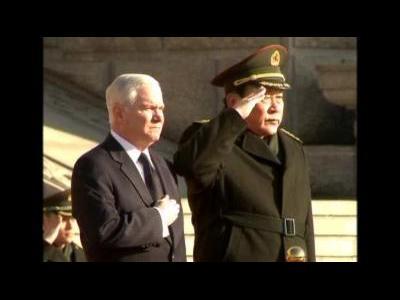
BEIJING (Reuters) – North Korea is becoming a direct threat to the United States and could develop an inter-continental ballistic missile within five years, U.S. Secretary of Defense Robert Gates said on Tuesday.
Gates detailed the new U.S. assessment of Pyongyang's capabilities during a visit to Beijing, where he praised Chinese efforts to reduce tensions on the Korean peninsula but also stressed the urgency to rein in the reclusive state.
China is North Korea's top diplomatic and economic backer and Gates said it was "self-evident" that North Korea would likely come up in talks between Chinese President Hu Jintao and U.S. President Barack Obama in Washington next week.
[ For complete coverage of politics and policy, go to Yahoo! Politics ]
"With the North Koreans' continuing development of nuclear weapons and their development of inter-continental ballistic missiles, North Korea is becoming a direct threat to the United States," Gates told reporters after talks with Hu.
Gates said he did not believe North Korea was an immediate threat, but added it was also not a "five-year threat."
"I think that North Korea will have developed an inter-continental ballistic missile within that time -- not that they will have huge numbers or anything like that," Gates said. "But they will have, I believe they will have a very limited capability."
North Korea has more than 800 ballistic missiles and more than 1,000 missiles of various ranges. It has sold missiles and technology overseas, with Iran a top buyer.
Pyongyang's arsenal already includes intermediate-range missiles that can hit targets at up to 3,000 km (1,860 miles) away, the Yonhap news agency quoted a South Korean official as saying last year. Those missiles could hit all of Japan and put U.S. military bases in Guam at risk.
An inter-continental ballistic missile, or ICBM, could potentially threaten the continental United States.
Adding to U.S. concerns, the North also revealed late last year it had made considerable progress in its uranium enrichment programme, potentially giving it a second route to make a nuclear bomb.
TALKS WITH THE NORTH?
The new U.S. concerns come amid heightened tensions on the Korean peninsula after a deadly attack on a South Korean island and the sinking of a South Korean warship last year.
Gates suggested Seoul's patience with the North had run out, saying: "If there is another provocation, there will be pressure on the South Korean government to react".
"We consider this a situation of real concern and we think there is some urgency to proceeding down the track of negotiations and engagement," Gates said, while again conditioning any talks on a show of North Korean sincerity.
After threatening the South with nuclear weapons last month, the North has made almost daily offers since the start of the year to return to the negotiating table.
Seoul, which has called the offers "propaganda", on Monday responded to an official request for talks from the North with a counter offer for a South-North Korean government meeting to confirm the North's sincerity.
Gates suggested North Korea could announce a moratorium on missile and nuclear testing.
"There are several areas where they could take concrete actions," said Gates, who will travel to Japan and South Korea later this week.
The North responded on Tuesday by declaring the only way for the two Koreas to work out their differences was to sit down first at a table to test each other's resolve to iron out differences through talks.
"Whether we are sincere or not will be proven when we sit together face-to-face," Minju Joson, a publication of the North's cabinet, said in an editorial carried by the official Korean Central News Agency
Iran plane crash toll rises to 77, black box found
TEHRAN, Iran – Investigators on Monday found the black box from a passenger jet that broke to pieces on impact while trying an emergency landing in a snowstorm in northwestern Iran, killing at least 77 people.
The pilots of the Boeing-727, operated by Iran's national airline and carrying 104 passengers and crew, reported a technical failure to the control tower before trying to make the landing Sunday night, state-run TV reported. The IranAir aircraft broke into several pieces, but Mahmoud Mozaffar, head of the rescue department of Iran's Red Crescent Society, said there was no explosion or fire.
Footage on state TV showed the plane's crumpled fuselage lying in a field, torn apart in several places, under whirling snow in the darkness as rescue workers and local farmers searched for survivors in the hours after the crash.
Heavy snow hampered rescue efforts, the semiofficial Fars news agency cited the head of the state emergency center, Gholam Reza Masoumi, as saying. That report also mentioned fog in the area.
State TV said the aircraft disappeared from radar and went down in farmland after making a second attempt to land at the airport in the northwestern city of Orumiyeh. The nature of the technical failure was not clear.
Iran's Transport Minister Hamid Behbahani said 77 people died and 27 were injured, some critically. Behbahani said the flight was carrying 104 passengers and crew, correcting earlier reports of 105 on board. The state news agency IRNA said two children were among the dead.
Behbahani said the plane's flight data recorder, known as the black box, has been recovered "and is now being studied by a committee probing the crash."
Four Iraqi nationals were aboard the plane, the official IRNA news agency reported late Monday. Two of them were among the victims while two others were in the list of those injured.
Some of the passengers were able to walk away from the landing, said Abbas Mosayebi, a spokesman for the civil aviation authority. There were conflicting accounts on whether all 104 on board were accounted for, with some TV reports saying all were found and others saying two remained missing.
President Mahmoud Ahmadinejad sent a message of condolence to the families of the victims and ordered a quick investigation of the cause of the crash.
The aircraft was headed from Tehran to Orumiyeh, capital of West Azerbaijan province, a distance of about 460 miles, or 700 kilometers.
Iran has a history of frequent air accidents blamed on its aging aircraft and poor maintenance. Many of the Boeing aircraft in IranAir's fleet were bought before the country's 1979 Islamic Revolution, which disrupted ties with the U.S. and Europe.
Iranian airlines, including those run by the state, are chronically strapped for cash, and maintenance has suffered, experts say. U.S. sanctions prevent Iran from updating its 30-year-old American aircraft and make it difficult to get European spare parts or planes as well. The country has come to rely on Russian aircraft, many of them Soviet-era planes that are harder to get parts for since the Soviet Union's fall.
In July 2009, a Russian-made jetliner crashed in northwest Iran shortly after taking off from the capital, killing all 168 on board.
In February 2003 a Russian-made Ilyushin 76 carrying members of the Revolutionary Guard crashed in the mountains of southeastern Iran, killing 302 people aboard.
The pilots of the Boeing-727, operated by Iran's national airline and carrying 104 passengers and crew, reported a technical failure to the control tower before trying to make the landing Sunday night, state-run TV reported. The IranAir aircraft broke into several pieces, but Mahmoud Mozaffar, head of the rescue department of Iran's Red Crescent Society, said there was no explosion or fire.
Footage on state TV showed the plane's crumpled fuselage lying in a field, torn apart in several places, under whirling snow in the darkness as rescue workers and local farmers searched for survivors in the hours after the crash.
Heavy snow hampered rescue efforts, the semiofficial Fars news agency cited the head of the state emergency center, Gholam Reza Masoumi, as saying. That report also mentioned fog in the area.
State TV said the aircraft disappeared from radar and went down in farmland after making a second attempt to land at the airport in the northwestern city of Orumiyeh. The nature of the technical failure was not clear.
Iran's Transport Minister Hamid Behbahani said 77 people died and 27 were injured, some critically. Behbahani said the flight was carrying 104 passengers and crew, correcting earlier reports of 105 on board. The state news agency IRNA said two children were among the dead.
Behbahani said the plane's flight data recorder, known as the black box, has been recovered "and is now being studied by a committee probing the crash."
Four Iraqi nationals were aboard the plane, the official IRNA news agency reported late Monday. Two of them were among the victims while two others were in the list of those injured.
Some of the passengers were able to walk away from the landing, said Abbas Mosayebi, a spokesman for the civil aviation authority. There were conflicting accounts on whether all 104 on board were accounted for, with some TV reports saying all were found and others saying two remained missing.
President Mahmoud Ahmadinejad sent a message of condolence to the families of the victims and ordered a quick investigation of the cause of the crash.
The aircraft was headed from Tehran to Orumiyeh, capital of West Azerbaijan province, a distance of about 460 miles, or 700 kilometers.
Iran has a history of frequent air accidents blamed on its aging aircraft and poor maintenance. Many of the Boeing aircraft in IranAir's fleet were bought before the country's 1979 Islamic Revolution, which disrupted ties with the U.S. and Europe.
Iranian airlines, including those run by the state, are chronically strapped for cash, and maintenance has suffered, experts say. U.S. sanctions prevent Iran from updating its 30-year-old American aircraft and make it difficult to get European spare parts or planes as well. The country has come to rely on Russian aircraft, many of them Soviet-era planes that are harder to get parts for since the Soviet Union's fall.
In July 2009, a Russian-made jetliner crashed in northwest Iran shortly after taking off from the capital, killing all 168 on board.
In February 2003 a Russian-made Ilyushin 76 carrying members of the Revolutionary Guard crashed in the mountains of southeastern Iran, killing 302 people aboard.
Chinese stealth fighter makes first test flight

AP – In this Friday Jan. 7, 2011, photo, a prototype of the Chinese J-20 stealth plane is seen during a runway …
BEIJING – China's radar-eluding stealth fighter made its first-known test flight Tuesday, marking dramatic progress in the country's efforts to develop cutting-edge military technologies.
The prototype plane dubbed the J-20 flew for about 15 minutes over an airfield in the southwestern city of Chengdu where it was spotted carrying out runway tests last week, Kanwa Asian Defense magazine editor Andrei Chang said.
Photos of the plane in flight and on the ground surrounded by men in civilian clothes and army overcoats were also posted on unofficial Chinese military websites. A J-10 fighter — China's last homegrown jet — flew behind it as a chase plane.
The test flight comes on the second day of a visit to China by U.S. Defense Secretary Robert Gates, and the normally secretive military made no attempt to hide it or remove photos and reports about the J-20 from the Internet.
The timing and hands-off approach is apparently intended to send the message that Beijing is responding to calls from the U.S. and others to be more transparent about its defense modernization and future intentions.
Although likely many years from entering China's inventory, the J-20 is a potential rival to the U.S. F-22 Raptor, the only stealth fighter currently in service. The U.S. is also employing stealth technology on the F-35 Joint Strike Fighter, while Russia's Sukhoi T-50's stealth fighter made its maiden flight last year and is set to enter service in about four years.
In the photos, China's twin-engine J-20 appears larger than either the Russian or U.S. fighters, potentially allowing it fly farther and carry heavier weapons.
The J-20 would pose the greatest immediate threat to Taiwan, the self-governing island that Beijing claims as Chinese territory — to be recovered by force if necessary. Taiwan's air force is composed mostly of aging U.S. F-16s and French Mirage jets, and its electronic warning systems would find it difficult to cope with stealth technology.
A Chinese stealth fighter would "seriously undermine the Taiwan air force's advantages," said Alexander Huang of Taipei's Tamkang University.
While a state newspaper reported last week on the plane's appearance, China's government and military have yet to comment officially. People who answered phones at government and Communist Party offices in Chengdu, as well as the plane's developer — the Chengdu Aircraft Industrial Group — all refused to comment.
China's aviation industry — both military and civilian — has made rapid progress in recent years but still relies heavily on imported technology. Propulsion has been a special problem, with Russian engines still powering the J-10 and J-11, a copy of Russia's Su-27 fighter.
Stealth technology is even more difficult to master because it relies on systems to hide the presence of the plane, while equipping the pilot with enough information to attack an enemy. Emissions must be hidden and the plane's fuselage sculpted to avoid detection by radar and infrared sensors.
Despite the challenges, the J-20's entry into the test flight stage seems to indicate China is progressing faster than expected with the new technology, even while the plane's true capabilities aren't known. Analysts said two prototypes have been developed, with one employing a Russian engine and the other a Chinese one. It wasn't clear which prototype flew Tuesday.
Chinese progress also potentially calls into question Gates' decision to cap production of the F-22 at 187 planes, partly because of claims that China would not have a fifth-generation fighter for years to come.
Along with the J-20, China's military is developing sophisticated new warships, submarines, missiles and possibly one or more aircraft carriers.
Assange due in UK court over Swedish extradition

LONDON (Reuters) – WikiLeaks' founder Julian Assange is due to appear in a London court on Tuesday as lawyers draw the battle lines in his fight to avoid extradition to Sweden for questioning about alleged sex crimes.
The mainly procedural hearing at the top security Belmarsh Magistrates' Court, due to start at 1000 GMT (3 p.m. EST), is likely to confirm the date for a full extradition hearing which is expected in early February.
The 39-year-old Australian computer expert, who has infuriated Washington by releasing details of secret U.S. diplomatic cables on his website, has protested his innocence over claims of sexual misconduct against two women.
"The hearing on Tuesday is to ensure that the real issues in the case are identified and that preparation of the case is progressing in a timely fashion," said a spokesman for Britain's courts service.
It will also decide elements of the legal process, such as which documents the prosecutors and defense lawyers should provide and whether any witnesses should be called up.
British police arrested Assange last month on a European warrant issued by Sweden following allegations made by two WikiLeaks' volunteers.
After spending nine days in jail, he was released on bail on December 16 after his supporters raised a surety of 200,000 pounds ($312,000).
As part of his bail conditions, Assange must stay at a mansion in eastern England, abide by a curfew, report to police daily and wear an electronic tag. Assange has described the curbs on him as "hi-tech house arrest."
Subscribe to:
Posts (Atom)