
MEXICO CITY (Reuters) - Mexico uncovered and stopped an international plot to smuggle late Libyan leader Muammar Gaddafi's son Saadi into the country using fake names and false papers, authorities said Wednesday.
A Canadian woman, a Danish man and two Mexicans were arrested on November 10 and 11 over an elaborate plan to bring Saadi Gaddafi, who is now in Niger, and his family to Mexico using forged documents, safe houses and private flights, they said.
Mexican officials acted on a tip in September about the network, which planned to settle the family near the popular tourist spot of Puerto Vallarta on the Pacific coast, Interior Minister Alejandro Poire said.
In preparation for the family's arrival, the criminal ring bought properties around Mexico and opened bank accounts. It also arranged for private flights to smuggle in the family and set up identities under assumed names, including Moah Bejar Sayed and Amira Sayed Nader, authorities said.
The plotters themselves used a network of flights between Mexico, the United States, Canada, Kosovo and the Middle East to plan the route and organize the logistics for Saadi's arrival, Poire said.
"Mexican officials ... succeeded in avoiding this risk, they dismantled the international criminal network which was attempting this and they arrested those presumed responsible," he told a news conference.
The plan was to bring Saadi - a businessman and former professional soccer player - and his family to a multimillion-dollar estate in Punta Mita, the Canadian newspaper National Post reported.
Punta Mita is a swanky area with luxury hotels about 25 miles from Puerto Vallarta.
'YOU CAN GET AWAY'
The Canadian woman, Cynthia Ann Vanier, was the ringleader of the plot and directly in touch with the Gaddafi family, Mexican authorities said.
They said the Danish man, Pierre Christian Flensborg, was in charge of logistics. The Mexican suspects were identified as Jose Luis Kennedy Prieto and Gabriela Davila Huerta, also known as de Cueto.
Mexico, fighting to contain raging drug-related violence, has broken some major cartels into smaller criminal gangs that may be willing to help international criminals and militants, said one academic who specializes in regional security issues.
"Mexico ... has a reputation deservedly or not for lawlessness and so it was probably a calculation that if you go to Mexico ... you can get away and hide out," said David Shirk, director of the Trans-Border Institute at the University of San Diego.
Saadi Gaddafi's lawyer Nick Kaufman said his client was still in Niger, where he fled as his father's 42-year rule crumbled in August. Niger has said he would remain in the West African nation until a United Nations travel ban is lifted.
"He is fully respecting the restraints placed on him presently by the international community," Kaufman told Reuters.
Like many senior members of the Gaddafi regime, Saadi was banned from traveling and had his assets frozen by a U.N. Security Council resolution when violence erupted in Libya earlier this year.
Interpol has issued a "red notice" requesting member states to arrest Saadi with a view to extradition if they find him in their territory.
Wednesday, December 7, 2011


Mikhail Gorbachev calls for a new vote in Russia
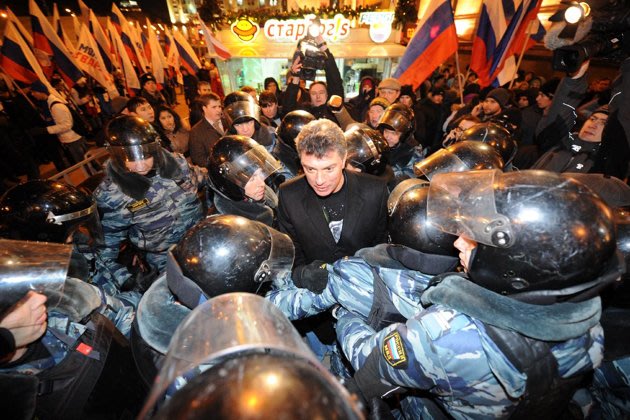
MOSCOW (AP) — Russian authorities should annul the results of the parliamentary vote and hold a new one, former Soviet leader Mikhail Gorbachev urged Wednesday as popular indignation grew over widespread allegations of election fraud.
The call for an entirely new vote by the last president of the Soviet Union was a remarkable development for an election that had not generated much interest during the campaign. Prime Minister Vladimir Putin had wanted to see his United Russia party do well to pave the way for his return to the presidency, but few Russians seemed to care about the vote, with many saying they assumed the results would be manipulated anyway.
United Russia won less than 50 percent of Sunday's vote, a steep fall from the 64 percent it won four years ago. But opposition parties and independent observers say even that result was inflated by vote-rigging, including alleged ballot-box stuffing and false voter rolls.
Gorbachev told the Interfax news agency that authorities must hold a fresh election or deal with a rising tide of discontent.
"More and more people are starting to believe that the election results are not fair," he told Interfax. "I believe that ignoring public opinion discredits the authorities and destabilizes the situation."
Surprisingly, thousands of Russians have rallied in Moscow and St. Petersburg in the last two days, facing off against tens of thousands of police and Interior Ministry troops. Hundreds of protesters have been detained in both cities. The unusually sustained protests suggests Putin's drive to regain his old job may not go as smoothly as he had expected.
The malaise revealed in Sunday's parliamentary election suggested Russians are tiring of Putin and his United Russia party, which has dominated all other political forces in Russia for the past dozen years and earned a reputation for corruption.
Gorbachev added that authorities "must admit that there have been numerous falsifications and ballot box stuffing."
He spoke on the same day that Putin officially registered to run for the presidency in a March vote.
Putin served as president from 2000 to 2008, when he moved into the prime minister's office because of a constitutional limit of two consecutive presidential terms. A constitutional amendment pushed through parliament by United Russia extended the presidential term from four to six years. Under it, Putin, 59, could theoretically serve as Russia's leader until 2024.
The 80-year-old Gorbachev, leader of the Soviet Union from 1985 until its breakup in 1991, has long had tense relations with Putin, but until recent years had refrained from directing his criticism of Russian politics at Putin.
Putin has been extremely critical of Gorbachev's legacy, including his concession to what many Russians saw as Western pressure to pull Soviet troops out of Germany, and has blamed him for the Soviet Union's demise.
Thousands of security forces were out in the Russian capital and helicopters roamed the sky Wednesday, a show of force following two days of protest. More opposition rallies were expected later in the day.
The Interior Ministry said Tuesday at least 51,500 police officers and 2,000 paramilitary troops have been deployed in Moscow since the election.
About 1,000 people gathered at a pro-Putin concert Wednesday afternoon in central Moscow. The crowd of mainly young people waved Russian flags and danced as organizers spoke on a stage adorned with a banner reading "The Future is Ours."
Someone dressed as a giant white bear — United Russia's mascot — danced among the crowd. He stopped occasionally to hug supporters — but kept right on dancing when someone ran out of the crowd to kick him in the rear.
College student Ivan Samburov, 17, said he had no interest in the protest rallies.
"I prefer just to stand like this and dance, to have fun and improve my mood, to feel that everything is good," he said.
The Russian Union of Journalists condemned police violence against protesters and called for an investigation into the dozens of attacks and arrests of journalists, describing them as "an attempt to gag and intimidate society."
On Wednesday, two video journalists working for the state-owned RIA Novosti news agency were briefly detained outside the Central Election Commission building where Putin was handing in his application to run.
The allegations of election fraud have fired up the opposition, which has long seen its protests crushed and its pleas ignored by the Kremlin-dominated media.
On Facebook, almost 15,000 people signed up to a page announcing an opposition rally for Saturday — and many of them have never taken part in political demonstrations
Mariya Boyarintseva, a 24-year-old event manager, said she has never been to a political rally before but she was going to Saturday's protest.
Boyarintseva said she didn't go to the rallies on Monday or Tuesday — which ended with clashes with police and hundreds detained — because "it felt a bit scary."
"Now, I have a feeling that I ought to go," she said.
Blagojevich gets 14 years in prison for corruption
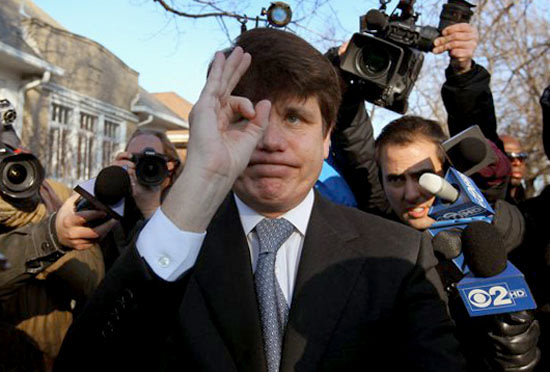
CHICAGO (AP) — Rod Blagojevich, the ousted Illinois governor whose three-year battle against criminal charges became a national spectacle, was sentenced to 14 years in prison Wednesday, one of the stiffest penalties imposed for corruption in a state with a history of crooked politics.
Among his 18 convictions is the explosive charge that he tried to leverage his power to appoint someone to President Barack Obama's vacated Senate seat in exchange for campaign cash or land a high-paying job.
Judge James Zagel gave Blagojevich some credit for taking responsibility for his actions — which the former governor did in an address to the court earlier in the day — but said that didn't mitigate his crimes. Zagel also said Blagojevich did good things for people as governor, but was more concerned about using his powers for himself.
"When it is the governor who goes bad, the fabric of Illinois is torn and disfigured and not easily repaired," Zagel said.
As the judge announced the sentence, which includes a $20,000 fine, Blagojevich hunched forward and his face appeared frozen. Minutes later, his wife, Patti Blagojevich, stood up and fell into her husband's arms. He pulled back to brush tears off her cheek and then rubbed her shoulders.
On his way out of the courthouse, Blagojevich cited author Rudyard Kipling and said it was a time to be strong, to fight through adversity and be strong for his children. He said he and wife were heading home to speak to their daughters, and then left without answering any questions.
The twice-elected Democrat received by far the harshest sentence among the four Illinois governors sent to prison in the last four decades. He is the second in a row to go to prison; his Republican predecessor, George Ryan, currently is serving 6 1/2 years. The other two got three years or less.
Blagojevich, in a last plea for mercy, tried something he never had before: an apology. After years of insisting he was innocent, he told the judge he'd made "terrible mistakes" and acknowledged that he broke the law.
"I caused it all, I'm not blaming anybody," Blagojevich said. "I was the governor and I should have known better and I am just so incredibly sorry."
But Zagel gave him little leeway.
"Whatever good things you did for people as governor, and you did some, I am more concerned with the occasions when you wanted to use your powers ... to do things that were only good for yourself," Zagel said.
The judge said he did not believe Blagojevich's contention, as his lawyers wrote in briefings, that his comments about the corruption schemes were simply "musings." Zagel said the jury concluded and he agreed that Blagojevich was engaged in actual schemes, and the undeniable leader of those schemes.
"The governor was not marched along this criminal path by his staff," Zagel said. "He marched them."
Prosecutors had asked for a sentence of 15 to 20 years, which Blagojevich's attorneys said was too harsh. The defense also presented heartfelt appeals from Blagojevich's family, including letters from his wife and one of his two daughters that pleaded for mercy.
But the judge made it clear early in the hearing that he believed that Blagojevich had lied on the witness stand when he tried to explain his scheming for the Senate seat, and he did not believe defense suggestions that the former governor was duped by his advisers.
The 54-year-old was ordered to begin serving his sentence on Feb. 16. In white-collar cases, convicted felons are usually given at least a few weeks to report to prison while federal authorities select a suitable facility. Blagojevich is expected to appeal his conviction, but it is unlikely to affect when he reports to prison.
Most of the prisons where Blagojevich could end up are outside Illinois. One is in Terre Haute, Ind., where Ryan is serving his own sentence. In prison, Blagojevich will largely be cut off from the outside world. Visits by family are strictly limited, Blagojevich will have to share a cell with other inmates and he must work an eight-hour-a-day menial job — possibly scrubbing toilets or mopping floors — at just 12 cents an hour.
According to federal rules, felons must serve at least 85 percent of the sentence a judge imposes — meaning Blagojevich wouldn't be eligible for early release until he serves nearly 12 years.
Going into the sentencing, many legal experts said the governor — who became a national punch line while doing reality TV appearances such as "Celebrity Apprentice" while his legal case unfolded — was likely to get around 10 years. A former Blagojevich fundraiser, Tony Rezko, recently was sentenced to 10 1/2 years, minus time served.
Prosecutors have said Blagojevich misused the power of his office "from the very moment he became governor." He was initially elected in 2002 on a platform of cleaning up Illinois politics in the midst of federal investigations that led to the prosecution and conviction of Ryan.
Defense attorneys have said Blagojevich has already paid a price in public ridicule and financial ruin, and had proposed a term of just a few years.
Blagojevich's sentencing came just days before his 55th birthday on Saturday, and nearly three years to the day of his arrest at dawn on Dec. 9, 2008, when the startled governor asked one federal agent, "Is this a joke?" In a state where corruption has been commonplace, images of Blagojevich being led away in handcuffs still came as a shock.
It took two trials for prosecutors to snare Blagojevich. His first ended deadlocked with jurors agreeing on just one of 24 counts — that Blagojevich lied to the FBI. Jurors at his retrial convicted him on 17 of 20 counts, including bribery and attempted extortion.
FBI wiretap evidence proved decisive. In the most notorious recording, Blagojevich is heard crowing that his chance to name someone to Obama's seat was "f---ing golden" and he wouldn't let it go "for f---ing nothing."
Blagojevich clearly dreaded the idea of prison time. Asked in an interview before his retrial about whether he dwelled on that prospect, he answered: "No. I don't let myself go there."
In the same interview, Blagojevich also explained that the family dog Skittles was bought after his arrest in to help his school-age daughters, Amy and Annie, cope with the stress of his legal troubles. He said he joked with them that, "If the worst happens (and I go to prison), you can get another dog and call him 'Daddy.'"
Russian police block new anti-Putin rally
MOSCOW (Reuters) - Plans for big new protests against Vladimir Putin fizzled on Wednesday after a show of force by Russian police who have detained more than 1,000 people in a crackdown since a parliamentary election dismissed by Kremlin foes as a fraud.
It was a setback for government opponents seeking to channel public anger over the election, widely seen as slanted in favour of Prime Minister Putin's ruling United Russia party, into a powerful protest movement.
Putin pressed ahead with his bid to return to the presidency next year, filing papers to register his candidacy, while former Soviet leader Mikhail Gorbachev suggested the official results of Sunday's vote were a "lie" and called for a new election.
A day after police dispersed protesters in central Moscow and seized others before they could even reach the rally, detaining more than 300, opposition activists had planned a new demonstration at the same site 24 hours later.
But hundreds of helmeted riot police blocked off the square after nightfall, pushing back reporters and shouting through loudspeakers: "Respected citizens, please do not stop, walk on your way so as not to hinder others."
Three youths emerged near a subway station entrance, chanting: "We want free elections!." Riot police marched them off to one of the dozens of police buses and truck that lined the streets nearby.
In St Petersburg, about 250 people protested, most of them youngsters, shouting "Shame!" Police detained about 70.
Kremlin opponents are trying to maintain momentum after 5,000 people turned out on Monday night for the largest opposition protest in Moscow in years, demanding fair elections and chanting "Russia without Putin!."
Police and Putin's spokesman have said unapproved protests will be stopped. The Interior Ministry said some 50,000 officers and 2,000 ministry troops remained in Moscow after the election.
A test of the drive to pressure Putin with street protests will come on Saturday, when opponents hope for a big turnout at a rally near the Kremlin.
LOCKED UP
Two protest leaders arrested after Monday's rally will still be in jail then. A judge on Wednesday rejected appeals filed by Alexei Navalny and Ilya Yashin against the 15-day jail terms they received the previous day.
Monday's protest, fanned by fraud accusations that spread on the Internet, underscored anger at United Russia and unhappiness among some Russians at the prospect of Putin's almost certain return to the Kremlin in a March presidential vote.
Voters bruised Putin in Sunday's election by sharply reducing his party's majority in the State Duma lower house.
Undeterred, Putin filed candidacy papers for the March 4 presidential vote, submitting the documents in a brief, nearly silent visit to the Central Election Commission headquarters.
Registration as a candidate is a formal step towards what could be another 12 years in the top job for Putin, 59, who was president from 2000 to 2008 and is now prime minister but remains Russia's paramount leader.
Putin and President Dmitry Medvedev, the protege he tapped as successor when the constitution barred him from a third successive term in 2008, said in September they plan to swap jobs next year, with Medvedev taking over as prime minister.
Putin remains Russia's most popular politician and is likely to win a six-year presidential term, after which he could run again, potentially serving until 2024.
But the sharp decline in support for his ruling party was a sign of frustration with the political system he has put in place, in which many Russians feel they have no influence.
United Russia received 49.4 percent of the votes in Sunday's election and will have 238 seats in the 450-member Duma, down from 315 now. Rival parties that won seats and the marginalized politicians leading street protests say even that result was inflated by fraud such as ballot-box stuffing.
GORBACHEV WANTS NEW ELECTIONS
"With each day, more Russians do not believe that the declared results are honest," Gorbachev was quoted as saying by Interfax news agency, adding that ignoring public opinion discredited the authorities and destabilized the situation.
"And so I think it is necessary to annul the results of this vote and announce new elections," he said.
Grigory Yavlinsky, whose liberal Yabloko party fell short of the 5 percent of votes needed to win Duma seats, said those who won seats should force a new election by refusing to take them.
"If you think that vote-rigging was substantial, then get out of the State Duma ... then we can have new elections that will pass off better," Yavlinsky told reporters.
The Communist Party will have 92 seats, the left-leaning Just Russia will have 64 and the nationalist LDPR 56. Kremlin critics say all three parties are part of a system managed by the Kremlin and present no real threat to Putin's rule.
The election and the police crackdown has increased tension between Russia and the West, already wary about Putin's planned return to the Kremlin.
International observers said the campaign was slanted in favour of United Russia. The United States and the European Union voiced concern about the conduct of the election and the treatment of protesters. Russia called the U.S. criticism "unacceptable."
It was a setback for government opponents seeking to channel public anger over the election, widely seen as slanted in favour of Prime Minister Putin's ruling United Russia party, into a powerful protest movement.
Putin pressed ahead with his bid to return to the presidency next year, filing papers to register his candidacy, while former Soviet leader Mikhail Gorbachev suggested the official results of Sunday's vote were a "lie" and called for a new election.
A day after police dispersed protesters in central Moscow and seized others before they could even reach the rally, detaining more than 300, opposition activists had planned a new demonstration at the same site 24 hours later.
But hundreds of helmeted riot police blocked off the square after nightfall, pushing back reporters and shouting through loudspeakers: "Respected citizens, please do not stop, walk on your way so as not to hinder others."
Three youths emerged near a subway station entrance, chanting: "We want free elections!." Riot police marched them off to one of the dozens of police buses and truck that lined the streets nearby.
In St Petersburg, about 250 people protested, most of them youngsters, shouting "Shame!" Police detained about 70.
Kremlin opponents are trying to maintain momentum after 5,000 people turned out on Monday night for the largest opposition protest in Moscow in years, demanding fair elections and chanting "Russia without Putin!."
Police and Putin's spokesman have said unapproved protests will be stopped. The Interior Ministry said some 50,000 officers and 2,000 ministry troops remained in Moscow after the election.
A test of the drive to pressure Putin with street protests will come on Saturday, when opponents hope for a big turnout at a rally near the Kremlin.
LOCKED UP
Two protest leaders arrested after Monday's rally will still be in jail then. A judge on Wednesday rejected appeals filed by Alexei Navalny and Ilya Yashin against the 15-day jail terms they received the previous day.
Monday's protest, fanned by fraud accusations that spread on the Internet, underscored anger at United Russia and unhappiness among some Russians at the prospect of Putin's almost certain return to the Kremlin in a March presidential vote.
Voters bruised Putin in Sunday's election by sharply reducing his party's majority in the State Duma lower house.
Undeterred, Putin filed candidacy papers for the March 4 presidential vote, submitting the documents in a brief, nearly silent visit to the Central Election Commission headquarters.
Registration as a candidate is a formal step towards what could be another 12 years in the top job for Putin, 59, who was president from 2000 to 2008 and is now prime minister but remains Russia's paramount leader.
Putin and President Dmitry Medvedev, the protege he tapped as successor when the constitution barred him from a third successive term in 2008, said in September they plan to swap jobs next year, with Medvedev taking over as prime minister.
Putin remains Russia's most popular politician and is likely to win a six-year presidential term, after which he could run again, potentially serving until 2024.
But the sharp decline in support for his ruling party was a sign of frustration with the political system he has put in place, in which many Russians feel they have no influence.
United Russia received 49.4 percent of the votes in Sunday's election and will have 238 seats in the 450-member Duma, down from 315 now. Rival parties that won seats and the marginalized politicians leading street protests say even that result was inflated by fraud such as ballot-box stuffing.
GORBACHEV WANTS NEW ELECTIONS
"With each day, more Russians do not believe that the declared results are honest," Gorbachev was quoted as saying by Interfax news agency, adding that ignoring public opinion discredited the authorities and destabilized the situation.
"And so I think it is necessary to annul the results of this vote and announce new elections," he said.
Grigory Yavlinsky, whose liberal Yabloko party fell short of the 5 percent of votes needed to win Duma seats, said those who won seats should force a new election by refusing to take them.
"If you think that vote-rigging was substantial, then get out of the State Duma ... then we can have new elections that will pass off better," Yavlinsky told reporters.
The Communist Party will have 92 seats, the left-leaning Just Russia will have 64 and the nationalist LDPR 56. Kremlin critics say all three parties are part of a system managed by the Kremlin and present no real threat to Putin's rule.
The election and the police crackdown has increased tension between Russia and the West, already wary about Putin's planned return to the Kremlin.
International observers said the campaign was slanted in favour of United Russia. The United States and the European Union voiced concern about the conduct of the election and the treatment of protesters. Russia called the U.S. criticism "unacceptable."
China's Hu urges navy to prepare for combat
Chinese President Hu Jintao on Tuesday urged the navy to prepare for military combat, amid growing regional tensions over maritime disputes and a US campaign to assert itself as a Pacific power.
The navy should "accelerate its transformation and modernisation in a sturdy way, and make extended preparations for military combat in order to make greater contributions to safeguard national security," he said.
Addressing the powerful Central Military Commission, Hu said: "Our work must closely encircle the main theme of national defence and military building."
His comments, which were posted in a statement on a government website, come as the United States and Beijing's neighbours have expressed concerns over its naval ambitions, particularly in the South China Sea.
Several Asian nations have competing claims over parts of the South China Sea, believed to encompass huge oil and gas reserves, while China claims it all. One-third of global seaborne trade passes through the region.
Vietnam and the Philippines have accused Chinese forces of increasing aggression there.
In a translation of Hu's comments, the official Xinhua news agency quoted the president as saying China's navy should "make extended preparations for warfare."
The Pentagon however downplayed Hu's speech, saying that Beijing had the right to develop its military, although it should do so transparently.
"They have a right to develop military capabilities and to plan, just as we do," said Pentagon spokesman George Little, but he added, "We have repeatedly called for transparency from the Chinese and that's part of the relationship we're continuing to build with the Chinese military."
"Nobody's looking for a scrap here," insisted another spokesman, Admiral John Kirby. "Certainly we wouldn't begrudge any other nation the opportunity, the right to develop naval forces to be ready.
"Our naval forces are ready and they'll stay ready."
State Department spokesman Mark Toner said: "We want to see stronger military-to-military ties with China and we want to see greater transparency. That helps answer questions we might have about Chinese intentions."
Hu's announcement comes in the wake of trips to Asia by several senior US officials, including President Barack Obama, Defense Secretary Leon Panetta and Secretary of State Hillary Clinton.
US undersecretary of defence Michelle Flournoy is due to meet in Beijing with her Chinese counterparts on Wednesday for military-to-military talks.
Chinese Premier Wen Jiabao last month warned against interference by "external forces" in regional territorial disputes including those in the South China Sea.
And China said late last month it would conduct naval exercises in the Pacific Ocean, after Obama, who has dubbed himself America's first Pacific president, said the US would deploy up to 2,500 Marines to Australia.
China's People's Liberation Army, the largest military in the world, is primarily a land force, but its navy is playing an increasingly important role as Beijing grows more assertive about its territorial claims.
Earlier this year, the Pentagon warned that Beijing was increasingly focused on its naval power and had invested in high-tech weaponry that would extend its reach in the Pacific and beyond.
China's first aircraft carrier began its second sea trial last week after undergoing refurbishments and testing, the government said.
The 300-metre (990-foot) ship, a refitted former Soviet carrier, underwent five days of trials in August that sparked international concern about China's widening naval reach.
Beijing only confirmed this year that it was revamping the old Soviet ship and has repeatedly insisted that the carrier poses no threat to its neighbours and will be used mainly for training and research purposes.
But the August sea trials were met with concern from regional powers including Japan and the United States, which called on Beijing to explain why it needs an aircraft carrier.
China, which publicly announced around 50 separate naval exercises in the seas off its coast over the past two years -- usually after the event -- says its military is only focused on defending the country's territory.
The navy should "accelerate its transformation and modernisation in a sturdy way, and make extended preparations for military combat in order to make greater contributions to safeguard national security," he said.
Addressing the powerful Central Military Commission, Hu said: "Our work must closely encircle the main theme of national defence and military building."
His comments, which were posted in a statement on a government website, come as the United States and Beijing's neighbours have expressed concerns over its naval ambitions, particularly in the South China Sea.
Several Asian nations have competing claims over parts of the South China Sea, believed to encompass huge oil and gas reserves, while China claims it all. One-third of global seaborne trade passes through the region.
Vietnam and the Philippines have accused Chinese forces of increasing aggression there.
In a translation of Hu's comments, the official Xinhua news agency quoted the president as saying China's navy should "make extended preparations for warfare."
The Pentagon however downplayed Hu's speech, saying that Beijing had the right to develop its military, although it should do so transparently.
"They have a right to develop military capabilities and to plan, just as we do," said Pentagon spokesman George Little, but he added, "We have repeatedly called for transparency from the Chinese and that's part of the relationship we're continuing to build with the Chinese military."
"Nobody's looking for a scrap here," insisted another spokesman, Admiral John Kirby. "Certainly we wouldn't begrudge any other nation the opportunity, the right to develop naval forces to be ready.
"Our naval forces are ready and they'll stay ready."
State Department spokesman Mark Toner said: "We want to see stronger military-to-military ties with China and we want to see greater transparency. That helps answer questions we might have about Chinese intentions."
Hu's announcement comes in the wake of trips to Asia by several senior US officials, including President Barack Obama, Defense Secretary Leon Panetta and Secretary of State Hillary Clinton.
US undersecretary of defence Michelle Flournoy is due to meet in Beijing with her Chinese counterparts on Wednesday for military-to-military talks.
Chinese Premier Wen Jiabao last month warned against interference by "external forces" in regional territorial disputes including those in the South China Sea.
And China said late last month it would conduct naval exercises in the Pacific Ocean, after Obama, who has dubbed himself America's first Pacific president, said the US would deploy up to 2,500 Marines to Australia.
China's People's Liberation Army, the largest military in the world, is primarily a land force, but its navy is playing an increasingly important role as Beijing grows more assertive about its territorial claims.
Earlier this year, the Pentagon warned that Beijing was increasingly focused on its naval power and had invested in high-tech weaponry that would extend its reach in the Pacific and beyond.
China's first aircraft carrier began its second sea trial last week after undergoing refurbishments and testing, the government said.
The 300-metre (990-foot) ship, a refitted former Soviet carrier, underwent five days of trials in August that sparked international concern about China's widening naval reach.
Beijing only confirmed this year that it was revamping the old Soviet ship and has repeatedly insisted that the carrier poses no threat to its neighbours and will be used mainly for training and research purposes.
But the August sea trials were met with concern from regional powers including Japan and the United States, which called on Beijing to explain why it needs an aircraft carrier.
China, which publicly announced around 50 separate naval exercises in the seas off its coast over the past two years -- usually after the event -- says its military is only focused on defending the country's territory.
Monday, December 5, 2011
Thousands protest against Putin in Moscow
MOSCOW (AP) — Several thousand people protested Monday night against Prime Minister Vladimir Putin and his party, which won the largest share of a parliamentary election that observers said was rigged.
It was perhaps the largest opposition rally in years and ended with police detaining some of the activists. A group of several hundred marched toward the Central Elections Commission near the Kremlin, but were stopped by riot police and taken away in buses. The total number of those detained was not immediately available.
Estimates of the number of protesters at the rally ranged from 5,000 to 10,000. They chanted "Russia without Putin" and accused his United Russia party of stealing votes.
United Russia took about 50 percent of Sunday's vote, a result that opposition politicians and election monitors said was inflated because of ballot stuffing and other vote fraud. It was a significant drop from the last election, when the party took 64 percent.
Pragmatically, the loss of seats in parliament appears to mean little; two of the three other parties winning seats have been reliable supporters of government legislation. But, it is a substantial symbolic blow to a party that had become virtually indistinguishable from the state itself.
It has also energized the opposition and poses a humbling challenge to the country's dominant figure in his drive to return to the presidency. Putin, who became prime minister in 2008 because of presidential term limits, will run for a third term in March and some opposition leaders saw the parliamentary election as a game-changer for what had been presumed to be Putin's easy stroll back to the Kremlin.
Also Monday, more than 400 Communist supporters gathered to express their indignation over the election, which some called the dirtiest in modern Russian history. The Communist Party finished second with about 20 percent of the vote.
"Even compared to the 2007 elections, violations by the authorities and the government bodies that actually control the work of all election organizations at all levels, from local to central, were so obvious and so brazen," said Yevgeny Dorovin, a member of the party's central committee.
Putin appeared subdued and glum even as he insisted at a Cabinet meeting Monday that the result "gives United Russia the possibility to work calmly and smoothly."
Although the sharp decline for United Russia could lead Putin and the party to try to portray the election as genuinely democratic, the wide reports of violations have undermined that attempt at spin.
Boris Nemtsov, a prominent figure among Russia's beleaguered liberal opposition, declared that the vote spelled the end of Putin's "honeymoon" with the nation and predicted that his rule will soon "collapse like a house of cards."
"He needs to hold an honest presidential election and allow opposition candidates to register for the race, if he doesn't want to be booed from Kamchatka to Kaliningrad," Nemtsov said on Ekho Moskvy radio.
Many Russians came to despise United Russia, seeing it as the engine of endemic corruption. The election showed voters that they have power despite what election monitors called a dishonest count.
"Yesterday, it was proven by these voters that not everything was fixed, that the result really matters," said Tiny Kox of the Council of Europe's Parliamentary Assembly, part of an international election observer mission.
Other analysts suggested the vote was a wake-up call to Putin that he had lost touch with the country. In the early period of his presidency, Putin's appeal came largely from his man-of-the-people image: candid, decisive and without ostentatious tastes.
But, he seemed to lose some of the common touch, appearing in well-staged but increasingly preposterous heroic photo opportunities — hunting a whale with a crossbow, fishing while bare-chested, and purportedly discovering ancient Greek artifacts while scuba-diving. And Russians grew angry at his apparent disregard — and even encouragement — of the country's corruption and massive income gap.
"People want Putin to go back to what he was in his first term — decisive, dynamic, tough on oligarchs and sensitive to the agenda formed by society," said Sergei Markov, a prominent United Russia Duma member.
The vote "was a normal reaction of the population to the worsening social situation," once Kremlin-connected political analyst Gleb Pavlovsky was quoted as saying by the Interfax news agency.
Only seven parties were allowed to field candidates for parliament this year, while the most vocal opposition groups were barred from the race. International monitors said the election administration lacked independence, most media were biased and state authorities interfered unduly at different levels.
"To me, this election was like a game in which only some players are allowed to compete," Heidi Tagliavini, the head of the observer mission of the Organization for Security and Cooperation in Europe, said.
Tagliavini said that of the 150 polling stations where the counting was observed, "34 were assessed to be very bad."
Other than the Communist Party, the socialist Just Russia and the Liberal Democratic Party led by mercurial nationalist Vladimir Zhirinovsky are also expected to increase their representation in the Duma; both have generally voted with United Russia, and the Communists pose only token opposition.
Two liberal parties were in the running, but neither got the 7 percent of the national vote needed to win seats. Nemtsov's People's Freedom Party, one of the most prominent liberal parties, was denied participation for alleged violations in the required 45,000 signatures the party had submitted with its registration application.
About 60 percent of Russia's 110 million registered voters cast ballots, down from 64 percent four years ago.
Social media were flooded with messages reporting violations. Many people reported seeing buses deliver groups of people to polling stations, with some of the buses carrying young men who looked like football fans, who often are associated with violent nationalism.
U.S. Secretary of State Hillary Rodham Clinton said the U.S. has "serious concerns" about the elections.
Russia's only independent election monitoring group, Golos, which is funded by U.S. and European grants, has come under heavy official pressure in the past week. Golos' website was incapacitated by hackers on Sunday, and its director Lilya Shibanova and her deputy had their cell phone numbers, email and social media accounts hacked.
Sunday, December 4, 2011
Zambia rejects rights group's call to arrest Bush
LUSAKA, Zambia (AP) — Zambia has dismissed an international rights group's call for the arrest on torture charges of former President George W. Bush, who has been touring Africa to raise awareness about cervical and breast cancer.
"On what basis does Amnesty International want us to arrest President Bush?" state media quoted Foreign Affairs Minister Chishimba Kambwili as saying while Bush, his wife and daughters ended their visit to Zambia on Saturday.
Kambwili said Zambia would have considered the request only if it had come from the International Criminal Court acting on behalf of international organizations like the United Nations.
Earlier in the week, Amnesty International said it had asked Tanzania, Zambia and Ethiopia to arrest Bush, "someone who has admitted to authorizing waterboarding." As president, Bush authorized the interrogation technique that simulates drowning and is viewed as torture by many.
Bush is warmly remembered across Africa for his U.S. President's Emergency Plan for AIDS Relief (PEPFAR), which since 2003 has provided AIDS treatment to millions on the continent hardest hit by the disease.
Bush started his Africa tour in Tanzania. He launched his Pink Ribbon Red Ribbon project Friday in Zambia. The project is aimed
at expanding the availability of breast care education and cervical cancer screening and treatment.
"On what basis does Amnesty International want us to arrest President Bush?" state media quoted Foreign Affairs Minister Chishimba Kambwili as saying while Bush, his wife and daughters ended their visit to Zambia on Saturday.
Kambwili said Zambia would have considered the request only if it had come from the International Criminal Court acting on behalf of international organizations like the United Nations.
Earlier in the week, Amnesty International said it had asked Tanzania, Zambia and Ethiopia to arrest Bush, "someone who has admitted to authorizing waterboarding." As president, Bush authorized the interrogation technique that simulates drowning and is viewed as torture by many.
Bush is warmly remembered across Africa for his U.S. President's Emergency Plan for AIDS Relief (PEPFAR), which since 2003 has provided AIDS treatment to millions on the continent hardest hit by the disease.
Bush started his Africa tour in Tanzania. He launched his Pink Ribbon Red Ribbon project Friday in Zambia. The project is aimed
at expanding the availability of breast care education and cervical cancer screening and treatment.
Saturday, December 3, 2011
Africa: ECOWAS to deploy 60 observers for Ivorian polls
Lagos, Nigeria - The ECOWAS Commission announced on Friday that it would deploy 60 observers for the 8-13 December 2011 legislative election in Cote d'Ivoire, at the 'special request' of the Ivorian government.
An ECOWAS Commission statement made available to PANA in Lahgos said the Mission, which is to be led by Prof. Theodore Holo, President of the High Court of Justice of the Republic of Benin, would consist of representatives of ECOWAS Parliament, ECOWAS Court of Justice, ECOWAS Council of Wise as well as Electoral Experts from member states.
More than 1,000 candidates from 35 political parties will contest the 255 parliamentary seats throughout the country.
'The election is taking place at a crucial time in the stabilization process of the country and will represent a milestone in the final exit from the recent Ivorian crisis,' the statement said.
'It will also constitute an important step in the participation by all stakeholders in national reconstruction and socio-economic development as well as the overall consolidation of democracy in Cote d’Ivoire.
The Commission appealed to all the candidates, their followers and supporters to maintain peace and order throughout the electoral process, the first since the country came out of a long-drawn post-election crisis that left 3,000 dead.
An ECOWAS Commission statement made available to PANA in Lahgos said the Mission, which is to be led by Prof. Theodore Holo, President of the High Court of Justice of the Republic of Benin, would consist of representatives of ECOWAS Parliament, ECOWAS Court of Justice, ECOWAS Council of Wise as well as Electoral Experts from member states.
More than 1,000 candidates from 35 political parties will contest the 255 parliamentary seats throughout the country.
'The election is taking place at a crucial time in the stabilization process of the country and will represent a milestone in the final exit from the recent Ivorian crisis,' the statement said.
'It will also constitute an important step in the participation by all stakeholders in national reconstruction and socio-economic development as well as the overall consolidation of democracy in Cote d’Ivoire.
The Commission appealed to all the candidates, their followers and supporters to maintain peace and order throughout the electoral process, the first since the country came out of a long-drawn post-election crisis that left 3,000 dead.
Egypt's election results of only 4 individual candidates released
Election results Egypt - It was an anti-climax for the Egyptian population as the Head of Higher Electoral Commission, Counsellor Abdel-Moez Ibrahim, came up with results of four clear-cut victories for individual candidates, saying that the rest of the 53 seats in the individual lists race would go to run-offs next week. He said four individual candidates, two of them from the Muslim Brotherhood's Freedom and Justice Party (FJP), won more than 50 percent of votes to gain outright victory out of 53 seats contested.
The results of the first phase of the country's first democratic election since the downfall of president Hosni Mubarak, came after two days of delay.
In a televised press conference, aired live on state television, Ibrahim said the final official results for the party lists' race, which constitutes two thirds of available seats, would only be announced by mid-January, at the end of the third and final phase of the parliamentary (Lower House) elections, in which Egypt's 18 other governorates will participate.
Ibrahim said the turnout in the first phase had reached a record 62% in the nine governorates that witnessed contests.
Nearly 8.5 million people out of the 13.6 million eligible voters participated in the largely peaceful polls that covered the governorates of Cairo, Alexandria, Damietta, Port-Said, Kafr Al-Sheikh, Fayoum, Assyut, Luxor, and the Red Sea.
The Shoura Council (Upper House) elections are then to follow, to conclude by March, where a joint session of both houses is to elect a panel for drafting the country's new constitution, which is to be put to a referendum.
Presidential elections are then to take place, at a date not later then end of June 2012, according to a timetable put forward by Egypt's interim ruling military council.
The results of the first phase of the country's first democratic election since the downfall of president Hosni Mubarak, came after two days of delay.
In a televised press conference, aired live on state television, Ibrahim said the final official results for the party lists' race, which constitutes two thirds of available seats, would only be announced by mid-January, at the end of the third and final phase of the parliamentary (Lower House) elections, in which Egypt's 18 other governorates will participate.
Ibrahim said the turnout in the first phase had reached a record 62% in the nine governorates that witnessed contests.
Nearly 8.5 million people out of the 13.6 million eligible voters participated in the largely peaceful polls that covered the governorates of Cairo, Alexandria, Damietta, Port-Said, Kafr Al-Sheikh, Fayoum, Assyut, Luxor, and the Red Sea.
The Shoura Council (Upper House) elections are then to follow, to conclude by March, where a joint session of both houses is to elect a panel for drafting the country's new constitution, which is to be put to a referendum.
Presidential elections are then to take place, at a date not later then end of June 2012, according to a timetable put forward by Egypt's interim ruling military council.
Amnesty urges African nations to arrest George Bush
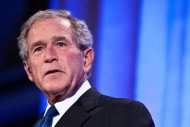
Amnesty International on Thursday urged Ethiopia, Tanzania and Zambia to arrest former US president George W. Bush for violating international torture laws, during his African tour this week.
Bush is touring the countries through to Monday to promote efforts to fight cervical and breast cancers, and Amnesty said the three nations have an obligation to arrest him under international law.
"All countries to which George W. Bush travels have an obligation to bring him to justice for his role in torture," said Amnesty's senior legal adviser Matt Pollard.
"International law requires that there be no safe haven for those responsible for torture; Ethiopia, Tanzania and Zambia must seize this opportunity to fulfil their obligations and end the impunity George W. Bush has so far enjoyed."
"Amnesty International recognizes the value of raising awareness about cervical and breast cancer in Africa, the stated aim of the visit, but this cannot lessen the damage to the fight against torture caused by allowing someone who has admitted to authorising water-boarding to travel without facing the consequences prescribed by law," the group said in a statement.
Amnesty made a similar appeal to Canada in October when Bush visited British Columbia for an economic summit.
The group claimed Bush authorised the use of "enhanced interrogation techniques" and "waterboarding" on detainees held in secret by the Central Intelligence Agency between 2002 and 2009.
Amnesty's case relies on the public record, US documents obtained through access to information requests, Bush's own memoir and a Red Cross report critical of the US's war on terror policies.
Amnesty cites several instances of alleged torture of detainees at the Guantanamo Bay, Cuba, naval facility, in Afghanistan and in Iraq, by the US military.
The cases include that of Zayn al Abidin Muhammed Husayn (known as Abu Zubaydah) and 9/11 mastermind Khalid Sheikh Mohammed, both arrested in Pakistan. The two men were waterboarded a total of 266 times from 2002 to 2003, according to the CIA inspector general, cited by Amnesty
Friday, December 2, 2011
In Whirlwind of an Election in Congo, Votes May Become Victims, Too

Preliminary results showing a big victory for the opposition were posted at a polling place in the capital, Kinshasa, on Tuesday.
KINSHASA, Democratic Republic of Congo — A volatile combination of suspicion, shootings, political clashes and voting breakdowns continued in Congo on Tuesday, the second day of nationwide elections, with some areas still casting ballots, others counting votes and initial results showing a big victory for the opposition here in the capital.
Congo’s election commission, which is run by a friend of President Joseph Kabila, is now threatening to disqualify tens of thousands of opposition votes, a surefire recipe for disaster, analysts say, one that set off widespread bloodshed in Ivory Coast during a similar, disputed election situation last year.
Many polling places in Kinshasa looked as if a hurricane had just barreled through them. Desks were upturned, torn-up ballots were tossed on the ground and crushed plastic soda bottles were everywhere, residue from a chaotic day of voting on Monday. Haggard-looking poll workers, party agents and bystanders slumped in the corners of dingy rooms after pulling all-nighters to witness the ballots’ being counted, one by one, hand by hand, usually by lantern light.
Many people here are deeply suspicious that Mr. Kabila, who has been in power for 10 years and is reviled in many quarters, is trying to steal the election.
“There is no way Kabila can win,” said Kabeya Mukendi Muya, a towering man who spent 29 hours straight at the polling place where he voted, making sure that the ballot boxes were not stuffed.
“He’s an assassin!” yelled another man, who then listed all the people the president’s security forces are widely believed to have gunned down in recent days.
Congo’s political temperature seems to be rising by the day. This is only the second time this vast and war-ravaged country has held anything resembling a democratic vote.
“And it was a mess,” declared one European Union election observer, speaking on the condition of anonymity.
Reports streamed in on Tuesday of polling places that had no ballots, and of millions of people turned away from the polls because of administrative errors. Many witnesses said that election officials had tried to sneak in fraudulent ballots; in some cases, mobs of young men viciously beat the officials and then burned the ballots.
Western donors, who supply Congo with billions of dollars of aid each year, had urged Congolese officials to delay the vote. But the Congolese government decided last week to plow ahead and frustrations are exploding across the country, with more than a dozen people killed and countless others seriously wounded in election-related clashes.
“Problematic,” was the word used by John Stremlau, a leader of the Carter Center’s monitoring delegation, to describe the election so far. But he also said it had been inspiring to see so many people lined up at the polls on Monday, many of them soaked by an equatorial thunder shower while waiting outside.
Countless Congolese have said they were driven to the polls by despair. Mr. Kabila, whose mellow, almost shy demeanor belies a more steely and repressive side, has presided over Congo’s steady slide in the past few years; it is now ranked as the least developed country on earth. His government has been accused of pocketing billions of dollars in corrupt business deals and depriving the Congolese people of their own natural riches — staggering reserves of copper, cobalt, diamonds and gold.
Eastern Congo, where the biggest spoils are, is still overrun by marauding militias, and on Monday many former fighters stripped off their camouflage, donned civilian clothes and served as agents for militias-turned-political parties.
“People are very worried about what the results will be and how the political parties will react,” said Anneke Van Woudenberg, a senior researcher at Human Rights Watch, who spoke from Goma, in the east. “This population has gone through 15 years of violence and they know how these things can explode.”
The election commission threatened on Tuesday to cancel votes in places where opposition supporters had attacked government agents, if the violence continues. The commission, led by Daniel Ngoy Mulunda, a Methodist preacher and longtime ally of Mr. Kabila, listed several cities racked by violence. Just about all of them were opposition strongholds where most of the votes would go to Etienne Tshisekedi, a 78-year-old rabble-rouser and the leading presidential challenger. The threat seemed to add fuel to the fire, as many opposition supporters saw it as a thinly-veiled government plot to steal votes.
Mr. Tshisekedi, who has been active in Congolese politics since the 1960s, seems to be on his way to a strong lead in Kinshasa. Early results tacked up at more than a dozen polling places showed him leading Mr. Kabila by a margin of about three to one.
Analysts expected Mr. Kabila, 40, to lose handily in the capital, just like he did in 2006, Congo’s first truly democratic vote. But back then Mr. Kabila was reasonably popular elsewhere in the country, especially in the east, where he earned the millions of votes that ultimately carried him to victory.
This time around, the east has its own local champion, Vital Kamerhe, a well-educated former speaker of Parliament, who seemed to be siphoning many votes away from Mr. Kabila. On Tuesday, Mr. Kamerhe said the vote had been so fraudulent that it should be annulled.
A winner is supposed to be declared by Dec. 6, when Mr. Kabila’s term wraps up. Many analysts say a fiercely disputed election could put Congo’s Western allies, including the United States, in a tight spot because if Mr. Kabila relies on fraud to hold onto power, mayhem could follow. But at the same time, the Western governments may be reluctant to side with Mr. Tshisekedi, who is viewed as a loose cannon and a prickly person to do business with.
Thursday, December 1, 2011
Ghana seeks Mi-171s Helicopters

The Ghana Air Force is looking to acquire four Mi-171Sh transport helicopters and says it will soon take delivery of four other helicopters from China. The service has bought five new aircraft over the last several months, including fixed wing transports and surveillance aircraft.
On November 17 the government put before parliament a proposal to acquire four Mi-171Sh helicopters for the Air Force, worth an estimated €64 365 584. Of that amount, €40.25 million may come from a Fidelity Bank Limited loan.
At present Ghana’s air force only has four Mi-171V, one AB-212, two A109A and two SA319 Alouette III helicopters in service, according to the IISS’s The Military Balance 2011.
It is not yet clear whether Ghana will receive approval to acquire the Mi-171s, as the Chinese government will supply four helicopters to the West African country. It is not yet clear what models China will supply.
China’s defence minister Lieutenant General Lian Guanlee recently led a 21 member delegation to Ghana, the first time such a high ranking official has visited the country since the two established diplomatic ties.
During Guanlee’s visit, China agreed to supply four helicopters to provide surveillance and security for Ghana’s oilfields, Ghanaian media reported last Friday.
Ghana’s defence minister Lieutenant General Joseph Henry Smith said that China will provide a 20 million Yuan grant to buy military equipment of Ghana’s choice.
Vice President John Dramani Mahma said that, “This will be complimentary to the recent provision of patrol boats to the Ghana navy, which would help in all the peacekeeping programmes the country’s security has been undertaking.”
“Ghana has been engaged in many peacekeeping missions and China has been very supportive in that direction, which is raising our national image,” he added.
In August it was announced that the Ghana Air Force had ordered two Airbus Miltiary C295 transports as well as an Embraer 190 jet and two Diamond DA 42 surveillance aircraft. The acquisition of the Embraer 190 from Brazil, together with logistic support and the construction of a hangar, will cost the West African nation about US$105.3 million.
The Diamond DA 42 MPP (Multi-Purpose Platform) Guardian surveillance and training aircraft are fitted with sensor turrets for surveillance missions. The twin turboprop DA 42 MPP aircraft are being funded through a €11.750 million loan from the Fidelity Bank Ghana Limited while the Deutsche Bank S.A.E will provide a €60 034 636 loan for the two C295 transports, according to the Daily Graphic newspaper.
Presumably, the DA 42s will be used for maritime patrol, especially safeguarding Ghana’s offshore oil assets - the country becoming a major oil producer in the region after beginning production in December last year. The Gulf of Guinea has seen a dramatic increase in the number of attacks on ships this year, prompting Ghana to modernise its navy.
On October 24 Ghana’s navy took delivery of four new Chinese-built patrol ships for combating piracy and increasing maritime security in its territorial waters. The 46 metre long vessels, named GNS Blika, GNS Garinga, GNS Chemle and GNS Ehwor, were built by China’s Poly Technologies Incorporated.
According to Citi News, the four patrol vessels cost around US$68 million. In September 2008 Ghana signed a US$39.86 million contract with Poly Technologies Incorporated (PTI) for two of the vessels, which are being funded by Ghana’s Ministry of Food and Agriculture.
In July last year Jane’s reported that Ghana’s Navy plans to acquire ten new vessels over the next two years. Ghana is also expanding its Naval Dockyard in the southwest of the country. Janes believes Ghana has ordered two 62 metre patrol craft from South Korea for delivery by July 2013.
On January 21, Ghana’s navy commissioned a refurbished Sea Dolphin-class fast-attack craft donated by South Korea. The vessel, GNS Stephen Otu, is being joined by two fast attack craft from Germany - in July last year Ghana announced the acquisition of two decommissioned Gepard class fast attack craft, which are 58 metres long and weigh 398 tonnes.
In 2008 the US government gave Ghana three ex-Coast Guard Defender class boats and another four in March last year and in December last year the Ghana Navy received six new speedboats.
Piracy in the Gulf of Guinea is not on the scale of that off Somalia, but analysts say an increase in scope and number of attacks in a region ill-equipped to counter the threat could affect shipping and investment. For instance, Cameroon blamed piracy for part of a 13 percent drop in oil output in 2009.
Other maritime problems include piracy and drug trafficking. The United Nations estimates that US$1 billion worth of cocaine, destined for Europe from Latin America, passed through West Africa in 2008
Monday, November 28, 2011
African Union needs to study Ghana's electoral exploit -Dr Matlosa

Accra, Nov. 28, GNA – Dr Khabele Matlosa, Representative of United Nations Development Programme (UNDP) in Ethiopia on Monday advocated for the African Union Commission to study Ghana's electoral accomplishment as a yardstick for portraying a positive image of the continent.
“Ghana's electoral system0 which over the years has established eight year alternative governance system with strong mechanism of confidence in the Electoral Management Body should serve as a trumpet.
“Africans must begin to move away from the negative electoral tag of violence, and champion the good stories of Ghana and other African countries. We have come of age,” Dr Matlosa stated at the “Eighth African Governance Forum,” in Accra.
The forum on the theme: “Youth Empowerment, Elections and Management of Diversity in Africa,” was jointly organised by UNDP, African Union, United Nations Economic Commission for Africa and the Government of Ghana.
It seeks to explore the interface between democracy, elections, and diversity management with imperatives for youth empowerment with a view to informing policy reforms at continental, regional and national levels.
Supporting the call for Africa to study Ghana's electoral systems, Ms Harmandip Ruby Sandhu-Rojon, UN Resident Coordinator in Ghana said Ghana and Zambia's recent elections and peaceful transition attested to the maturity that political parties and their leaders could exhibit, despite political, regional and other forms of diversity.
She said 2012 would witness over 20 countries in Africa going to the polls, stressing that development partners and governments of these countries had proactively set in motion some modalities to address the root causes of conflict that might trigger off during elections.
Mrs Sandhu-Rojon noted that this year, over 30 Presidential, Parliamentary and Local Government elections were conducted across the continent.
However, she said several of them were clouded by violence that demonstrated links between democratic deficits and youth discontent, lubricated by the oil of ethnic tensions.
Mrs Sandhu-Rojon explained that electoral violence were often a precursor for post-election violence. "The commencement of violent hostilities during elections typically sees violence continuing and deepening social cleavages".
She said measures to be adopted to avoid electoral violence next year should include the building of national capacities to peacefully resolve differences through partnerships, dialogue and the building of trust and consensus.
On the process of youth empowerment, elections and ethnic diversity, Mrs Sandhu-Rojon, called for early involvement of the youth and women, because they constituted potent but under-utilised resources in the pursuit of democracy and peace.
She noted that the African Governance Forum (AGF) was a flagship governance programme which sought to strengthen governance partnerships on the basis of consensus-building among African governments, private sector, civil society organisations and their external partners.
The two-day forum would serve as preparatory summit for the Eighth AGF Summit to be hosted by South Africa in 2012.
GNA
Court strikes out ‘illegal’ fuel tax on Ghanaians
An Accra High Court has ruled that the National Petroleum Authority (NPA) and the Tema Oil Refinery (TOR) should scrap the ex-refinery differential tax which was imposed on Ghanaians without parliamentary approval.
The court also directed that an amount of GHc 661 million surplus accrued thereof since June 2009 should be deposited into the Consolidated Fund on behalf of Ghanaians.
The NPP's parliamentary candidate for Obuasi, Kweku Kwarteng, took the matter to court two years ago challenging the propriety of the tax.
He claimed that the ex-refinery differential component of the ex-refinery price imposed by NPA and TOR on June 5, 2009 was illegal and that the ex-pump prices announced by the first defendant on June 5, 2009, on the basis of the ex-refinery prices referred to, were not in accordance with the prescribed petroleum pricing formula and therefore unlawful.
On Monday, Justice Patrick Bayerh, an Accra High Court ruled in favour of Mr Kwarteng.
Speaking to Citi News after the court ruling, Mr. Kwarteng's lawyer Alex Abban said the ruling essentially means that fuel prices may have to go down.
Source: Citifmonline
The court also directed that an amount of GHc 661 million surplus accrued thereof since June 2009 should be deposited into the Consolidated Fund on behalf of Ghanaians.
The NPP's parliamentary candidate for Obuasi, Kweku Kwarteng, took the matter to court two years ago challenging the propriety of the tax.
He claimed that the ex-refinery differential component of the ex-refinery price imposed by NPA and TOR on June 5, 2009 was illegal and that the ex-pump prices announced by the first defendant on June 5, 2009, on the basis of the ex-refinery prices referred to, were not in accordance with the prescribed petroleum pricing formula and therefore unlawful.
On Monday, Justice Patrick Bayerh, an Accra High Court ruled in favour of Mr Kwarteng.
Speaking to Citi News after the court ruling, Mr. Kwarteng's lawyer Alex Abban said the ruling essentially means that fuel prices may have to go down.
Source: Citifmonline
Sunday, November 27, 2011
Pakistan demands US vacate suspected drone base
ISLAMABAD (AP) — The Pakistani government has demanded the U.S. vacate an air base within 15 days that the CIA is suspected of using for unmanned drones.
The government issued the demand Saturday after NATO helicopters and jet fighters allegedly attacked two Pakistan army posts along the Afghan border, killing 24 Pakistani soldiers.
Islamabad outlined the demand in a statement it sent to reporters following an emergency defense committee meeting chaired by Pakistani Prime Minister Yousuf Raza Gilani.
Shamsi Air Base is located in southwestern Baluchistan province. The U.S. is suspected of using the facility in the past to launch armed drones and observation aircraft to keep pressure on Taliban and al-Qaida militants in Pakistan's tribal region.
THIS IS A BREAKING NEWS UPDATE. Check back soon for further information. AP's earlier story is below.
ISLAMABAD (AP) — Pakistan blocked vital supply routes for U.S.-led troops in Afghanistan on Saturday after coalition helicopters and fighter jets allegedly killed 24 Pakistani troops at two posts along a mountainous frontier that serves as a safe haven for militants.
The incident was a major blow to American efforts to rebuild an already tattered alliance vital to winding down the 10-year-old Afghan war. Islamabad called the carnage in one of its tribal areas a "grave infringement" of the country's sovereignty and warned it could affect future cooperation with Washington, which is seeking Pakistan's help in bringing Afghan insurgents to the negotiating table.
A NATO spokesman said it was likely that coalition airstrikes caused Pakistani casualties, but an investigation was being conducted to determine the details. If confirmed, it would be the deadliest friendly fire incident by NATO against Pakistani troops since the Afghan war began a decade ago.
A prolonged closure of Pakistan's two Afghan border crossings to NATO supplies could cause serious problems for the coalition. The U.S., which is the largest member of the NATO force in Afghanistan, ships more than 30 percent of its non-lethal supplies through Pakistan. The coalition has alternative routes through Central Asia into northern Afghanistan, but they are costlier and less efficient.
Pakistan temporarily closed one of its Afghan crossings to NATO supplies last year after U.S. helicopters accidentally killed two Pakistani soldiers. Suspected militants took advantage of the impasse to launch attacks against stranded or rerouted trucks carrying NATO supplies. The government reopened the border after about 10 days when the U.S. apologized. NATO said at the time the relatively short closure did not significantly affect its ability to keep its troops supplied.
But the reported casualties are much greater this time, and the relationship between Pakistan and the U.S. has severely deteriorated over the last year, especially following the covert American raid that killed Osama bin Laden in a Pakistani garrison town in May. Islamabad was outraged it wasn't told about the operation beforehand.
The Pakistani army said Saturday that NATO helicopters and fighter jets carried out an "unprovoked" attack on two of its border posts in the Mohmand tribal area before dawn, killing 24 soldiers and wounding 13 others. The troops responded in self-defense "with all available weapons," an army statement said.
Pakistan army chief Gen. Ashfaq Parvez Kayani condemned the attack, calling it a "blatant and unacceptable act," according to the statement.
A spokesman for NATO forces, Brig. Gen. Carsten Jacobson, said Afghan and coalition troops were operating in the border area of eastern Afghanistan when "a tactical situation" prompted them to call in close air support. It is "highly likely" that the airstrikes caused Pakistani casualties, he told BBC television.
"My most sincere and personal heartfelt condolences go out to the families and loved ones of any members of Pakistan security forces who may have been killed or injured," said Gen. John Allen, the top overall commander of U.S. and NATO forces in Afghanistan, in a statement.
The border issue is a major source of tension between Islamabad and Washington, which is committed to withdrawing its combat troops from Afghanistan by the end of 2014.
Much of the violence in Afghanistan is carried out by insurgents who are based just across the border in Pakistan. Coalition forces are not allowed to cross the frontier to attack the militants. However, the militants sometimes fire artillery and rockets across the line, reportedly from locations close to Pakistani army posts.
American officials have repeatedly accused Pakistani forces of supporting — or turning a blind eye — to militants using its territory for cross-border attacks. But militants based in Afghanistan have also been attacking Pakistan recently, prompting complaints from Islamabad.
The two posts that were attacked Saturday were located about 1,000 feet apart on a mountain top and were set up recently to stop Pakistani Taliban militants holed up in Afghanistan from crossing the border and staging attacks, said local government and security officials.
There was no militant activity in the area when the alleged NATO attack occurred, local officials said. Some of the soldiers were standing guard, while others were asleep, they said, speaking on condition of anonymity because they were not authorized to talk to the media.
Pakistan army spokesman Maj. Gen. Athar Abbas said map references of all of the force's border posts have been given to NATO several times.
Pakistani Prime Minister Yousuf Raza Gilani summoned U.S. Ambassador Cameron Munter to protest the alleged NATO strike, according to a Foreign Ministry statement. It said the attack was a "grave infringement of Pakistan's sovereignty" and could have serious repercussions on Pakistan's cooperation with NATO.
Munter said in a statement that he regretted any Pakistani deaths and promised to work closely with Islamabad to investigate the incident.
Pakistan moved quickly to close both its Afghan border crossings to NATO supplies, a reminder of the leverage the country has.
A Pakistani customs official told The Associated Press that he received verbal orders Saturday to stop all NATO supplies from crossing the border through Torkham in either direction. The operator of a terminal at the border where NATO trucks park before they cross confirmed the closure. They spoke on condition of anonymity because of the sensitivity of the matter.
Saeed Ahmad, a spokesman for security forces at the other crossing in Chaman in southwest Pakistan, said that his crossing was also blocked following orders "from higher-ups."
The U.S., Pakistan, and Afghan militaries have long wrestled with the technical difficulties of patrolling a border that in many places is disputed or poorly marked. Saturday's incident took place a day after a meeting between NATO's Gen. Allen and Pakistan army chief Gen. Ashfaq Parvez Kayani in Islamabad to discuss border operations.
The meeting tackled "coordination, communication and procedures ... aimed at enhancing border control on both sides," according to a statement from the Pakistani side.
The U.S. helicopter attack that killed two Pakistani soldiers on Sept. 30 of last year took place south of Mohmand in the Kurram tribal area. A joint U.S.-Pakistan investigation found that Pakistani soldiers fired at the two U.S. helicopters prior to the attack, a move the investigation team said was likely meant to notify the aircraft of their presence after they passed into Pakistani airspace several times.
A U.S. airstrike in June 2008 reportedly killed 11 Pakistani paramilitary troops during a clash between militants and coalition forces in the tribal region.
The government issued the demand Saturday after NATO helicopters and jet fighters allegedly attacked two Pakistan army posts along the Afghan border, killing 24 Pakistani soldiers.
Islamabad outlined the demand in a statement it sent to reporters following an emergency defense committee meeting chaired by Pakistani Prime Minister Yousuf Raza Gilani.
Shamsi Air Base is located in southwestern Baluchistan province. The U.S. is suspected of using the facility in the past to launch armed drones and observation aircraft to keep pressure on Taliban and al-Qaida militants in Pakistan's tribal region.
THIS IS A BREAKING NEWS UPDATE. Check back soon for further information. AP's earlier story is below.
ISLAMABAD (AP) — Pakistan blocked vital supply routes for U.S.-led troops in Afghanistan on Saturday after coalition helicopters and fighter jets allegedly killed 24 Pakistani troops at two posts along a mountainous frontier that serves as a safe haven for militants.
The incident was a major blow to American efforts to rebuild an already tattered alliance vital to winding down the 10-year-old Afghan war. Islamabad called the carnage in one of its tribal areas a "grave infringement" of the country's sovereignty and warned it could affect future cooperation with Washington, which is seeking Pakistan's help in bringing Afghan insurgents to the negotiating table.
A NATO spokesman said it was likely that coalition airstrikes caused Pakistani casualties, but an investigation was being conducted to determine the details. If confirmed, it would be the deadliest friendly fire incident by NATO against Pakistani troops since the Afghan war began a decade ago.
A prolonged closure of Pakistan's two Afghan border crossings to NATO supplies could cause serious problems for the coalition. The U.S., which is the largest member of the NATO force in Afghanistan, ships more than 30 percent of its non-lethal supplies through Pakistan. The coalition has alternative routes through Central Asia into northern Afghanistan, but they are costlier and less efficient.
Pakistan temporarily closed one of its Afghan crossings to NATO supplies last year after U.S. helicopters accidentally killed two Pakistani soldiers. Suspected militants took advantage of the impasse to launch attacks against stranded or rerouted trucks carrying NATO supplies. The government reopened the border after about 10 days when the U.S. apologized. NATO said at the time the relatively short closure did not significantly affect its ability to keep its troops supplied.
But the reported casualties are much greater this time, and the relationship between Pakistan and the U.S. has severely deteriorated over the last year, especially following the covert American raid that killed Osama bin Laden in a Pakistani garrison town in May. Islamabad was outraged it wasn't told about the operation beforehand.
The Pakistani army said Saturday that NATO helicopters and fighter jets carried out an "unprovoked" attack on two of its border posts in the Mohmand tribal area before dawn, killing 24 soldiers and wounding 13 others. The troops responded in self-defense "with all available weapons," an army statement said.
Pakistan army chief Gen. Ashfaq Parvez Kayani condemned the attack, calling it a "blatant and unacceptable act," according to the statement.
A spokesman for NATO forces, Brig. Gen. Carsten Jacobson, said Afghan and coalition troops were operating in the border area of eastern Afghanistan when "a tactical situation" prompted them to call in close air support. It is "highly likely" that the airstrikes caused Pakistani casualties, he told BBC television.
"My most sincere and personal heartfelt condolences go out to the families and loved ones of any members of Pakistan security forces who may have been killed or injured," said Gen. John Allen, the top overall commander of U.S. and NATO forces in Afghanistan, in a statement.
The border issue is a major source of tension between Islamabad and Washington, which is committed to withdrawing its combat troops from Afghanistan by the end of 2014.
Much of the violence in Afghanistan is carried out by insurgents who are based just across the border in Pakistan. Coalition forces are not allowed to cross the frontier to attack the militants. However, the militants sometimes fire artillery and rockets across the line, reportedly from locations close to Pakistani army posts.
American officials have repeatedly accused Pakistani forces of supporting — or turning a blind eye — to militants using its territory for cross-border attacks. But militants based in Afghanistan have also been attacking Pakistan recently, prompting complaints from Islamabad.
The two posts that were attacked Saturday were located about 1,000 feet apart on a mountain top and were set up recently to stop Pakistani Taliban militants holed up in Afghanistan from crossing the border and staging attacks, said local government and security officials.
There was no militant activity in the area when the alleged NATO attack occurred, local officials said. Some of the soldiers were standing guard, while others were asleep, they said, speaking on condition of anonymity because they were not authorized to talk to the media.
Pakistan army spokesman Maj. Gen. Athar Abbas said map references of all of the force's border posts have been given to NATO several times.
Pakistani Prime Minister Yousuf Raza Gilani summoned U.S. Ambassador Cameron Munter to protest the alleged NATO strike, according to a Foreign Ministry statement. It said the attack was a "grave infringement of Pakistan's sovereignty" and could have serious repercussions on Pakistan's cooperation with NATO.
Munter said in a statement that he regretted any Pakistani deaths and promised to work closely with Islamabad to investigate the incident.
Pakistan moved quickly to close both its Afghan border crossings to NATO supplies, a reminder of the leverage the country has.
A Pakistani customs official told The Associated Press that he received verbal orders Saturday to stop all NATO supplies from crossing the border through Torkham in either direction. The operator of a terminal at the border where NATO trucks park before they cross confirmed the closure. They spoke on condition of anonymity because of the sensitivity of the matter.
Saeed Ahmad, a spokesman for security forces at the other crossing in Chaman in southwest Pakistan, said that his crossing was also blocked following orders "from higher-ups."
The U.S., Pakistan, and Afghan militaries have long wrestled with the technical difficulties of patrolling a border that in many places is disputed or poorly marked. Saturday's incident took place a day after a meeting between NATO's Gen. Allen and Pakistan army chief Gen. Ashfaq Parvez Kayani in Islamabad to discuss border operations.
The meeting tackled "coordination, communication and procedures ... aimed at enhancing border control on both sides," according to a statement from the Pakistani side.
The U.S. helicopter attack that killed two Pakistani soldiers on Sept. 30 of last year took place south of Mohmand in the Kurram tribal area. A joint U.S.-Pakistan investigation found that Pakistani soldiers fired at the two U.S. helicopters prior to the attack, a move the investigation team said was likely meant to notify the aircraft of their presence after they passed into Pakistani airspace several times.
A U.S. airstrike in June 2008 reportedly killed 11 Pakistani paramilitary troops during a clash between militants and coalition forces in the tribal region.
Subscribe to:
Posts (Atom)