Search This Blog

Saturday, November 20, 2010

Pope: condoms can be justified in some cases


VATICAN CITY – Pope Benedict XVI says in a new book that condoms can be justified for male prostitutes seeking to stop the spread of HIV, a stunning comment for a church criticized for its opposition to condoms and for a pontiff who has blamed them for making the AIDS crisis worse.

The pope made the comments in a book-length interview with a German journalist, "Light of the World: The Pope, the Church and the Signs of the Times," which is being released Tuesday. The Vatican newspaper ran excerpts on Saturday.

Church teaching has long opposed condoms because they are a form of artificial contraception, although it has never released an explicit policy about condoms and HIV. The Vatican has been harshly criticized for its opposition.

Benedict said that condoms are not a moral solution. But he said in some cases, such as for male prostitutes, they could be justified "in the intention of reducing the risk of infection."

Benedict called it "a first step in a movement toward a different way, a more human way of living sexuality."

He used as an example male prostitutes, for whom contraception is not an issue, as opposed to married couples where one spouse is infected. The Vatican has come under pressure from even some church officials in Africa to condone condom use for monogamous married couples to protect the uninfected spouse from getting infected.

Benedict drew the wrath of the United Nations, European governments and AIDS activisits when he told reporters en route to Africa in 2009 that the AIDS problem on the continent couldn't be resolved by distributing condoms.

"On the contrary, it increases the problem," he said then.

Journalist Peter Seewald, who interviewed Benedict over the course of six days this summer, raised the Africa condom comments and asked Benedict if it wasn't "madness" for the Vatican to forbid a high-risk population to use condoms.

"There may be a basis in the case of some individuals, as perhaps when a male prostitute uses a condom, where this can be a first step in the direction of a moralization, a first assumption of responsibility," Benedict said.

But he stressed that it wasn't the way to deal with the evil of HIV, and elsewhere in the book reaffirmed church teaching on contraception and abortion, saying: "How many children are killed who might one day have been geniuses, who could have given humanity something new, who could have given us a new Mozart or some new technical discovery?"

He reiterated the church's position that abstinence and marital fidelity is the only sure way to prevent HIV.

Cardinal Elio Sgreccia, the Vatican's longtime top official on bioethics and sexuality, elaborated on the pontiff's comments, stressing that it was imperative to "make certain that this is the only way to save a life." Sgreccia told the Italian news agency ANSA that that is why the pope on the condom issue "dealt with it in the realm of ecceptionality."

The condom question was one that "needed an answer for a long time," Sgreccia was quoted as saying. "If Benedict XVI raised the question of exceptions, this expection must be accepted ... and it must be verified that this is the only way to save life. This must be demonstrated," Sgreccia said.

Christian Weisner, of the pro-reform group We Are Church in the pope's native Germany, said the pope's comments were "surprising, and if that's the case one can be happy about the pope's ability to learn."

William Portier, a Catholic theologian at the University of Dayton, a Marianist school in Ohio, said he had not read the report in the Vatican newspaper, but he said it would be wrong to conclude that the comments mean the pope has made a fundamental, broad change in church teaching on artificial contraception.

"He's not going to do that in an offhand remark to a journalist in an interview," Portier said.

In other comments, Benedict said:

• If a pope is no longer physically, psychologically or spiritually capable of doing his job, then he has the "right, and under some circumstances, also an obligation to resign."

• On Islam, in Europe, he declined to endorse such moves as France's banning the burqa or Switzerland's citizen referendum to forbid topping mosques with minarets.

"Christians are tolerant, and in that respect they also allow others to have their self-image," Benedict replied when asked if Christians should be "glad" about such initiatives. "As for the burqa, I can see no reason for a general ban."

• He was surprised by the scale of clerical sex abuse in his native Germany and acknowledged that the Vatican could have better communicated its response. "One can always wonder whether the pope should not speak more often."

• On Pope Pius XII, the wartime pontiff accused by some Jewish groups of staying publicly silent on the Holocaust: Some historians have asked the Vatican to put Pius' sainthood process on hold until the Holy See opens up its archives from his papacy. But Benedict said an internal "inspection" of those unpublished documents failed to support "negative" allegations against Pius.

"It is perfectly clear that as soon as he protested publicly, the Germans would have ceased to respect" Vatican extraterritoriality of convents and monasteries who were sheltering Jews from the Nazi occupiers in Rome. "The thousands who had found a safe haven ... would have been surely deported," Benedict argued.

In the book, Benedict also offers insights into his private life, saying he enjoys watching TV at home in the evenings with his secretaries and the four women who take care of his apartment, preferring the evening news and an Italian TV show from decades ago "Don Camillo and Peppone" about a parish priest and his bumbling assistant.

He said he always wears his white cassock, never a sweater, and wears an old Junghans watch that was left to him by his sister when she died. When he prays, he said, he prays to the Lord as well as the saints and considers himself good friends with Sts. Augustine, Bonaventure and Thomas Aquinas

Makola Razed Down

Daily Guide

Shop owners at Makola Number Two Market in Accra could not contain the trauma of seeing their investments in ruins following a fire outbreak in the market on Thursday evening.

The Ghana National Fire Service (GNFS) was once again tested on its readiness as it was overwhelmed by the fire for several hours, while onlookers wondered if the personnel were really primed for the assignment.

The fire, which started at about 6:45pm, intimidated the firemen with their tenders until about midnight when it was finally brought under control. It left in its trail destroyed goods worth several millions of Ghana cedis.

Residents in the neighbourhood wondered why a nearby fire station, the Accra Central Fire Station, could not manage the fire.

The intensity of the fire could be determined by the pockets of smouldering fire dotting the place as firemen moved around to put them out, with soldiers and policemen on standby to contain any act of lawlessness when such situations arise.

A fireman told DAILY GUIDE that they had been working all night to bring the situation under control, an indication of how serious the fire was.

The place had been thrown into a state of mourning and market women and men wept uncontrollably over the loss of their wares and capital, with victims claiming that they had cash in their shops.

A female trader said amidst tears that her cash of $20,000 which was hidden in her stall got burnt completely.

The main gates to the market were said to be locked up at the time of the fire outbreak, making it difficult for fire tenders to gain access to fight the fire, a deficiency which prompted questions about such a modern market without an emergency access.

It took several hours for fire personnel to break through the market gates but their inability to access fire hydrants exacerbated the situation. About three traders were said to have collapsed upon hearing the news of the disaster.

Eyewitnesses gave contradictory statements about how the fire started. While some said a power outage triggered the inferno, others claimed it was due to electrical faults.

At about 10:04am yesterday, President John Evans Atta Mills arrived at the scene to assess the extent of damage.

The President, who was visibly shaken by the turn of events, assured the victims of government’s assistance to get them back into business. He would order an investigation into the disaster, he assured them.

“This fire outbreak is a bother to all of us so I came to assure you that we will investigate to know what exactly happened,” the President stated.

“But I am appealing to the National Disaster Management Organisation, the Accra Metropolitan Assembly, and the Regional Co-ordinating Council to assist you.

“We, as a government, will not turn our back on you. I know that most of you are wailing and weeping because you have lost your capital completely. So we will do whatever we can to help you,” he promised.

Nii Armah Ashittey, Greater Accra Regional Minister, advised the traders to observe basic safety rules to prevent disasters such as what had happened.

He said the Regional Co-ordinating Council would collaborate with all stakeholders to ensure that the market was rebuilt.

Nii Tackie Commey, MP for Odododiodioo, also assured victims of the government’s support to get them back into business.

He appealed for fire hydrants and access routes in the various markets to forestall such eventualities.

The original Makola Market was also razed by a mysterious fire outbreak many years ago and the displaced market women were transferred to the location which got burnt last Thursday.

The market was constructed with funds from the Social Security and National Insurance Trust, a national pension fund for Ghanaian workers not in the security services.

Major markets have been scenes of fire outbreaks in the past few months. The Kumasi Central Market has had its share of the mysterious fires twice or so. The Kantamanto Market in the Central Business District of Accra and the Takoradi Market have also not been spared.

However, there was no report of lives lost in the Thursday incident

Thursday, November 18, 2010

Ghana Stocks May Jump 40% as Oil Spurs World's Highest Growth, Exotix Says

Ghana’s main stock index, the best performer in Africa this quarter, may soar another 40 percent this year as the start of oil production spurs the world’s fastest pace of economic growth, Exotix Ltd. said.

Exotix, the London-based brokerage that gets a quarter of its revenue from African securities and three quarters from frontier markets, said buy orders for Ghanaian stocks are up more than 50 percent from the start of the year, even after a 9.8 percent rally since March 31 drove valuations above the average for emerging markets. The country’s All-Share Index has a further 20 to 40 percent “upside” in 2010, according to Ashley Bendell, New-York-based frontier and emerging market equity broker at Exotix.

The west African nation’s equity market has been the most volatile globally. It soared 58 percent in 2008, beating all 93 national equity gauges tracked by Bloomberg, after its discovery of oil in 2007 and as crude jumped to a record $147.27 a barrel. The measure plunged 47 percent last year, the world’s worst slump, when crude tumbled to as little as $32.70 a barrel and Ghana’s currency depreciation triggered 20 percent inflation and a $1 billion International Monetary Fund bailout.

“The oil find has without a doubt brought a lot of interest,” Bendell said in an interview in Johannesburg.

Templeton Asset Management Ltd.’s Mark Mobius said in his blog on June 24 that he’s looking at Ghana along with South Africa, Nigeria, Egypt, Kenya, Botswana, Morocco and Tunisia for investment.

Too Small

Ghana’s index is rising as the IMF predicts a surge in economic growth to 20.1 percent in 2011, triple the average 6.5 percent for developing nations. The cocoa and gold exporter is scheduled to start pumping oil in the fourth quarter of this year. Oil has gained 75 percent since the beginning of last year to $78 a barrel.

The market remains too small to allow larger fund managers to buy and sell stocks, said Bryan Collings, who manages $1 billion in London-based Hexam Capital Partners LLP’s Global Emerging Markets fund. He has no holdings in Ghana and favors China and Brazil.

“I don’t think Ghana’s all that brilliant, the market isn’t liquid and there are often concerns about getting money in and out,” Collings said. “For us, it’s key to stay relatively liquid.”

Banks, Oil Stocks

The market value of shares listed on the Ghana Stock Exchange is $12.8 billion, according to data from the bourse, a fraction of South Africa’s All Share Index at $590 billion, based on Bloomberg data. Average trading volume is about 650,000 shares a day, compared with an average 215 million in South Africa.

The lower trading volume in Ghana means it can take months to carry out orders for share trades, Bendell at Exotix said. Ghana’s pension-reform program may help boost trading by allowing private brokers to manage company retirement plans for the first time, he said.

Ghana Commercial Bank Ltd., the country’s biggest lender with 157 branches, and Ghana Oil Co., which runs a network of filling stations in the West African nation, may be among the biggest gainers, Bendell said. Ghana Commercial’s stock has doubled this year, while Ghana Oil has rallied 59 percent.

Tullow Oil Plc, which owns a 34.7 percent stake in the Jubilee field off Ghana’s western coast, said production will start at 120,000 barrels a day. The field, with as much as 1.8 billion barrels, will make Ghana one of the world’s top 50 oil producers, according to Tullow. Shares in Tullow jumped 98 percent last year and are down 18 percent this year.

Gold, Cocoa

Ghana’s stock rally this quarter has lifted valuations to 15.1 times estimated earnings from 9 times on March 31, Bloomberg data show. Valuations on the MSCI Emerging Market Index have fallen in the same period to 11.5 times expected earnings from 13.

“The stock-market valuations are relatively attractive versus sub-Saharan and emerging-market peers, given the country’s growth outlook and political stability,” Bendell said. “There’s a lot of focus on how government will spend its oil income.”

Inflation has slowed from a five-year peak of 20.7 percent in June 2009 to 10.7 percent last month, the 11th consecutive monthly decline. The rate is the lowest since December 2007. The central bank reduced its benchmark interest rate to 15 percent in April and has cut a total of 3.5 percentage points since November.

Wednesday, November 17, 2010

Nigerian Mend rebels claim Exxon kidnapping

Nigeria's Movement for the Emancipation of the Niger Delta (Mend) has claimed responsibility for the kidnapping of seven oil workers in a raid on an ExxonMobil facility on Sunday and has threatened a major attack.

Mend made a press statement confirming that the attack on the ExxonMobil Ibeno oil facility in Akwa Ibom state was carried out by its fighters. The group also claimed the Nigerian military has fired rockets at one of its camps.

The offshore factory raid was the latest in a string of incidents in recent months in the Niger Delta - the heart of the country's huge oil industry.

“Certainly Mend wants us to see this as part of a renewed campaign by a united movement,” says William Hartley, manager of Jane's Terrorism and Insurgency Centre. “In part, the attacks at the moment are an attempt to re-establish Mend effectively as an active brand. But what we are now talking about in terms of Mend is nowhere near what we used to consider to be Mend last year, which was a coordinated movement operating across the Delta.”

Last year, the government introduced a programme whereby rebels could swap arms for education programmes. All the major field commanders of Delta rebel groups are still committed to it, but there have been some problems in implementing the system efficiently.

“Foot soldiers have experienced considerable delays in getting what they had been promised," says Hartley. "This inevitably results in disaffection and creates a constituency of people who are susceptible to being re-recruited by the militant organisations.”

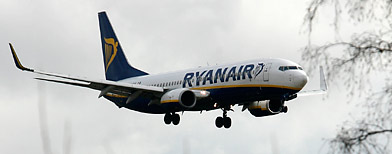
Furious Ryanair passengers protest in plane


BRUSSELS (AFP) – More than 100 angry Ryanair passengers sat in a dark cabin without food or water for four hours Wednesday, refusing to leave their plane after it was diverted to Belgium, authorities and passengers said.

The passengers, mostly French tourists who were supposed to land near Paris after returning from holidays in Morocco, refused to come out of the aircraft even after the crew had left it at the Liege airport in southern Belgium.

Reda Yahiyaoui, a business owner who was travelling with his wife, a two-month-old baby and a three-year-old, said the passengers had no water and the toilets in the plane were locked.

"The pilot left and he even left the cockpit door open," he said.

After several hours of negotiations with furious passengers, officials convinced them to leave the plane and wait inside the airport for buses that would take them to their original destination, a firefighter told AFP.

"The negotiation was so difficult that we weren't sure they would come out," the firefighter said by telephone.

"People are obviously outraged. I'm just trying to look out for their well-being," he said.

Passengers on the plane told AFP that the flight had left Fes, Morocco, three hours late at 7:15 pm local time on Tuesday but had been unable to land in Beauvais, France, because by that time the airport there had closed.

The plane landed in Liege at around 11:30 pm and passengers only agreed to come out after 3:30 am the next morning.

"This is unacceptable," Mylene Netange, who runs a network on social responsibility for business leaders, told AFP.

"The plane didn't land in Beauvais but in Liege without warning us. Consequently, we refused to leave the plane," she said.

A Ryanair spokesperson was not immediately reachable for comment.

Ghana On The Wrong Path With Recent Chinese Loans

Courtesy of GhanaWeb

Ghana is obviously on the wrong path with the signing of recent billions of dollars in Chinese loans. While some economic observers hailed it as a major financial lifeline to a country on a continent that is unable to attract such a magnitude of financial support from the international financial centers like Washington, London, and Paris, and their Bretton Woods Institutions, Beijing is fast becoming a reliable alternative to the traditional lenders.
However, an unimpeachable source, who was a member of the delegation that negotiated the deal, is unhappy with some of the elements of the deal. According to him, China, as a result of its fast-paced development, is seeking ways to dispose some of its rickety old trains, built over three decades ago, to make way for the connection of its fast trains across the entire Chinese mainland. As part of the deal, Ghana is to receive these old coaches and tracks which will amount to unspecified billions of dollars.
This reliable source believes the dollar amount for which these coaches are being offered to Ghana could buy the newer or advanced versions of coaches within the European market, a market which is also seeking ways to dispose newer versions of such coaches in order to adopt newer technologies the Chinese have unveiled in the rail market. His fear is that these trains have outlived their usefulness in the Chinese economy and are worth a “scrap” in a couple of years or a few years. “These trains will not only unnecessarily tie the Ghana Railway Corporation to the Chinese manufacturers for parts that may not be available anywhere else, but considering the maintenance culture in Ghana, these trains will become white elephants in a couple of years,” he fumed.
One wonders loudly why Ghanaian leadership never does any critical analysis before jumping on board to sign agreements that have repercussions for the future of the country. According to a member of the delegation that went to China to sign this loan deal amidst pomp and pageantry, any attempt to dissuade the team from some of the elements of the contract was seen by some members of the team who lacked know-how on technical matters as an attempt to stall the progress of government business.
In 2005, Bob Geldof, an Irish Singer, writer and a political activist, brought together celebrities to global audiences in a campaign that culminated in anti-poverty gigs around the world—London, New York, Paris, Los Angeles, among others.
Ghana, a small West African country with a population just under 25 million people, received debt forgiveness of US$4 billion, halving her debt. But in a span of three years, by the time its previous administration—the National Patriotic Party (NPP)—was leaving office, the debts have mounted back to what they were before the debt forgiveness in 2005.
Today, Ghana’s debt has passed the single digit of the 1990s and the first decade of the 21st century. It is now in the double digits without the necessary accompanying economic developments and their reflections in the lives of its citizens. Ghanaian, whether NPP or NDC (the National Democratic Congress, the current Ghanaian administration), must learn to hold their governments accountable for financial transactions in the name of corporate Ghana for which their children and grandchildren will pay the price.
The Ghana government must adopt some level of prudence in the management of loans it contracts from countries like China. A loan is not a freebie. Besides, Bob Geldof may not be strong enough by 2015, a decade after the 2005 anti-poverty campaign, to initiate debt forgiveness for the poor. China is not a Father Christmas and may not subscribe to debt forgiveness, so Ghana should thread carefully!
As we continue to fill political and technical positions with square pegs in round holes we are likely to be descending fast into the abyss of economic doldrums. A simple developmental economic analysis can tell members to the team that buying scrap trains creates a dependency situation. It is like buying a 12 year old car rather than a three year old car.
Let me use the car recent recall of Toyota cars for faulty brakes. How many Ghanaians are able to return their Toyota cars to the manufacturers for a benefit that had accrued mainly to users of Toyota cars in North America, Europe, and elsewhere? So for convenience sake, Ghanaians continue to pay for death traps.
Without in depth analysis, one is tempted to think it is a good deal for Ghana. As usual the non strategic thinking o four leaders whether it is NPP or NDC becomes the core issue. All of a sudden the Chinese are getting foothold in our economy. They have factories in Ghana and are still involved in retail trade of the goods they manufacture in Ghana? …What kind of suicidal industrial or commercial policy do we have as a nation? So the Chinese export hoods to Ghana and now we import their literally “100 years old rail cars” which sooner than later will be unreliable and need spare parts. Since we have bought these rail cars under loan we are now the new owners. So Ghana will have to buy spare parts from China earlier than if we had bought brand new trains. We are creating jobs for the Chinese. Would it not be icing on the cake if the Chinese were asked to transfer that technology of repairs to Ghana with Kwame Nkrumah University of Technology (TEK) Mechanical, Civil and Materials Engineering departments to set up shops with Suame Magazine workers to produce these parts? Can we imagine the amount of JOBS we will create for our citizens? What about spin off industries!!!! Think, Ghana Think.
Carl Miller
Center for Global Watch
London

..Read More

Monday, November 15, 2010

Chinese workers build 15-story hotel in just six days


As the United States and China battle over the finer points of currency manipulation at the G-20 summit, American negotiators may want to take note of this startling testimonial to the productivity of Chinese workers: A construction crew in the south-central Chinese city of Changsha has completed a 15-story hotel in just six days. If nothing else, this remarkable achievement will stoke further complaints from American economic pundits that China's economy is far more accomplished than ours in tending to such basics as construction.

Meanwhile, it's easy to imagine the disorientation of Changsha residents who'd gone away, or who just hadn't recently ventured into the downtown neighborhood of the new Ark Hotel: "Honey, I don't remember a hotel there, do you?"

The work crew erected the hotel -- a soundproofed, thermal-insulated structure reportedly built to withstand a magnitude 9 earthquake -- with all prefabricated materials. In other words, a crew of off-site factory workers built the sections, and their on-site counterparts arranged them on the foundation for the Ark project.


Despite the frenetic pace of construction, no workers were injured -- and thanks to the prefab nature of the process, the builders wasted very few construction materials. Below is a time-lapse video that shows the hotel being built from the ground up in less than a week:

Saturday, November 13, 2010

Near Exchange Of Blows In Parliament Over Oil Cash


Hell nearly broke loose in Parliament on Wednesday November 10, during a meeting of Members of the Joint Committee on Finance and Energy to discuss the Petroleum Revenue Management Bill.

According to insiders, the disagreements, which nearly resulted in exchange of blows, started after the Majority side tabled a motion, seeking to amend clause 5 of the bill which forbids government from using the nation’s oil resources as collateral for loans.

The Minority had long accused the Mills administration of harboring plans to amend clause 5 of the bill to allow the administration to use the nation’s oil revenue as collateral to contract huge loans.

Although the Government has persistently denied the minority’s claims, Wednesday’s meeting exposed the falsehood that may have characterized past denials of the government on the issue.

Insiders told Citi News there was near exchange of blows over the issue at the meeting of the Committee Chairman; Hon James Avedzi who moved the motion for a continuation of debate on the proposed amendments.

Amidst rising tempers, Hon Avedzi abruptly truncated the meeting in an attempt to prevent the exchange of words to degenerate into fisticuffs.

When Citi News caught up with him after sitting of Parliament on Thursday November 11, he confirmed the incident but denied that there was near exchange of blows at the meeting.
 
"If we had insisted that we should continue to go on that issue nobody knows what would have happened. But we are matured people and we don't expect that to happen so the best thing to do was to call off the meeting and thats just what I did. Parliament is about debates from time to time we disagree on issues and later come to a compromise" he said.

Thursday, November 11, 2010

Ghana Must Learn From Nigeria

Courtesy of GhanaWeb, Thursday,November 11, 2010
By Kojo Appiah-Kubi, Phd

One of the biggest challenges facing Ghana currently, as the newest oil-producing country, is how to use its oil wealth strategically to promote sustainable development. The country can, however, count itself luckier to be able to learn from its big brother, Nigeria, which has been producing oil since 1958 and has consequently accumulated such a worth of experience, both positive and negative. One such experience that Ghana would have to learn is how Nigeria having earned billions of dollars from oil exports today is languishing economically with a massive debt burden and high levels of poverty.

Over the period 1971–2005, for instance, Nigeria is estimated to have earned an extra $390 billion in oil-related fiscal revenues or 4.5 times 2005 gross domestic product (GDP), expressed in constant 2000 dollars. During this same period the proportion of its population estimated to be leaving in poverty rose successively from 28% in 1980 to a peak level of 70% in 1990 before levelling off at 54.4% in 2004. The latest records estimate about 48% of Nigerians to be poor. In absolute terms the per capita GDP of the average Nigerian plummeted from US$1,200 in 1981 to about US$300 in 2000. Economists refer to this coexistence of vast oil resources and extreme personal poverty in Nigeria as the “resource curse”. What is more ironic is that this huge flow of oil revenues has been accompanied by rapid substantial increases in the country’s external debt from $3.4 billion in 1980 to about $33 billion in 2002. This mountain of debts and its associated colossal service burden reached a crisis level in the advent of the new Millennium and contributed to cripple Nigeria’s economy so much as to cause the then President Obasanjo to declare the country insolvent in 2002 by completely halting its debt payments and later applying for the debt (HIPC) relief, which was granted in 2005.

But how did Nigeria land itself in debt problems, its oil wealth notwithstanding and what can Ghana learn from the mistakes of Nigeria? The origins of Nigeria's external debt problems date back to the policies pursued during the 1970s oil boom that led successive governments to emphasise on heavy investment in public works, import-substituting industries and public consumption. During the mid seventies the presence of proven oil reserves amidst increasing oil prices gave Nigeria a perceived credit-rating far higher than its domestic and macroeconomic fundamentals would have otherwise justified. With the industrialised world seeking for other oil sources to meet their ever increasing demand for oil alternative to the volatile Middle East, it turned to Nigeria with offers of new loans to build its social and economic infrastructure. Without any blueprint for the sustainable utilization of its oil revenues, the country began a massive infrastructural development financed with short term loans. Indeed some western countries, with their eyes on Nigeria’s oil, competed among themselves to finance and construct infrastructural projects and import substitution industries.

Nigeria also saw in its oil wealth and increasing oil revenues from rising oil prices a de facto collateral for loans, and, without due consideration to revenue volatility normally associated with oil price instability, borrowed to finance misguided spending programmes. Against all common sense of fiscal caution the government ran deficit budget financing and borrowed against future oil income to finance large-scale ‘iconic’ projects designed ostensibly to boost economic activity, symbolize government achievement and lift local and regional profile. Gigantic projects like the building of a new capital city, Abuja, three huge steel mills, 14 airports, among others, pro¬gressed very fast during this period. That was also the time when many young Ghanaians saw in Nigeria a greener pasture in search of jobs and flooded there after them. With rising oil boom in the 70s and early 80s, the non-oil sector and local agricultural produce became totally neglected and the economy consequently became increasingly dependent on rising imports of consumer goods and other raw materials. During that time, as is reported, due to ship traffic congestion, the vessel turnaround time at the Lagos port exceeded one month.

With so many projects being implemented at the same time the country’s capacity to efficiently implement these projects for which loans have been contracted became seriously challenged and outstripped. The results were a high level of mismanagement and pervasive corruption. The high level of corruption led the World Bank to conclude that 80 percent of Nigeria’s energy revenues benefit only one percent of the population.

It appears that Ghana is poised to repeat the past mistakes of Nigeria. Ghana is beginning to produce oil soon but has no blue print as to how it intends to use the expected revenues productively. There is currently the talk about the need to build the country’s social and economic infrastructure just like the Nigerians did in the late 70s and early 80s. For this reason, the country is ready to borrow huge sums of money against future potential oil-revenues to finance these infrastructural projects without due consideration to availability of implementation capacity, due diligence, economic viability and impact assessment, etc. The 10 billion STX Korean Housing loan, the largest loan deal ever in Africa, is a particular example. This loan alone is equivalent to about 60% of the country’s Gross Domestic Product. Just at the same time this loan deal is being processed the Chinese want to over beat the Korean offers with tens of billions of dollars in loan pledges for infrastructural and trade financing. The Japanese also seem to be doing their utmost best to attract the attention of Ghana with billions of loan offers. The Europeans, with their long colonial, trade and other business affiliations with Ghana would definitely not want to be left out of the Ghana show. The big brothers in the Americas, US and Canada, are indeed also putting together their own dancing and musical tunes to attract the interest of Ghana government most.

But why has Ghana become so attractive to the developed world, when just a few years ago, the country was having difficulty in securing credit financing of about a few tens of thousands? The news is that Ghana is going to export oil soon in commercial quantities, a commodity with an extremely high demand in the developed countries. Just like what happened to Nigeria in the 70s these developed countries are using these jumbo loans to secure the long term development of their own respective economies with regular supply of oil. In the case of Nigeria the first major borrowing of US$1 billion, referred to at that time as the "jumbo loan" was contracted from the international capital market in 1978, increasing the total external debt stock to US$2.2 billion. Thereafter, the debt stock rose astrono¬mi¬cally in epidemic proportions from $3.4 billion in 1980 to $17.3 billion in 1985 and $29.2 billion in 1990 and $33 in 2002. Indeed Nigeria’s checkered past has important lessons for Ghana’s future, lessons that should be learnt if the country does not want to suffer the same resource curse that Nigeria suffers.

The first lesson is the acceptance not to over-blow the relative importance of the oil, despite its tremendous potential economic impact if managed properly. It is unfortunate that the oil is being seen by politicians as the panacea to all of Ghana’s problems. Rather it should be seen as just one of the many finite natural endowments of the country, whose benefits could only be maximised through innovative high-value addition. The present and future generations stand to benefits from this resource only if the country does not follow the Nigerian example of using the oil revenues in frivolous investments.

Utilization of oil revenues should be based on a credible long term monitorable development plan to bring about structural transformation in the economy, meant to reduce Ghana’s growth dependency on a narrow set of low-value agricultural commodities and other natural resources, which are subject to the volatilities of the world marketplace. This plan should best be separated from the annual budget based on the consolidated fund so as to avoid benchmarking government economic policies against the state of the oil sector. The oil revenue spin-off should also be used to strongly strengthen the private sector in the non-oil sector through tax incentives and infrastructure development. Non-tariff barriers to support domestic manufacturing should be tenured and targeted. With so many positive and negative experiences abound from which Ghana can learn, failure to use the oil resources sustainably is not an option.

...Read More

Wednesday, November 10, 2010

Nigeria: Arms Import - Frightening Details Uncovered

Lagos Vanguard
As the nation awaits the resolution of the riddles surrounding the illegal importation of the large cache of arms and ammunition including rockets through the Apapa Ports in July, more damning and frightening details continue to ooze out from security sources about the arms import

Sunday Vanguard reliably gathered that the investigating teams are still baffled about the mystery surrounding the loading port of the deadly cargoes. Whereas there have been various attempts to link the 13 containers of arms to Iran, Hamas fighters in Gaza, etc, insiders insisted that investigations so far have revealed that before the cargoes arrived the Lagos ports, they had gone through trans-shipment in Greece, Spain and India. However, there is no certainty yet about the original loading sea port.

It was further learnt that although the 13 containers (alongside 70 others), consigned to one Mr. Ali Abbas Usman Jega of No. 6B Nouakchott Street, Wuse Zone 1, Abuja, arrived the ports on July 15, 2010 on board the vessel MV CMA CGM Everest through doctored manifest and without Form M, it was the unsuccessful attempt to convert the containers to diplomatic cargo and trans ship or re-export same to State House, Banjul, The Gambia, that aroused the suspicion of the State Security Service (SSS), which raised a red flag to the Customs Area Comptroller, Apapa Ports.

Sources confirmed that when the doctored manifest details were electronically-imputed into the Customs ASYCUDA System, they showed that not only did the cargoes not have Form M, there was also no Risk Assessment Report (RAR), a clear violation of the cargo clearance process in Nigeria. Although an alert concerning the cargoes was raised, neither the importer nor the agent came forth to make any declaration. And, if there was no declaration (laying of claim),the Customs could only keep an eye on the containers pending the expiration of the 90 days permitted by law before being put on the Uncleared Cargo List.

The Gambian connection
Sunday Vanguard was told that suspicions heightened when, in August, a Customs licensed company, Jedo Investment Company, first attempted to re-export the containers to Banjul, The Gambia - a request that was rejected because only a shipping company could make such application to the Customs. Then, in September, a shipping company, CMA CGM Delmas Nigeria Ltd, submitted a purported manifest amendment to change the consignee to Kanilai Farms, State House, Banjul, The Gambia. This would have facilitated a seamless re-shipment as a diplomatic cargo, except that there was no formal notification from The Gambian High Commission. Two, there was no Form CCI, a mandatory document for diplomatic shipment.

Meanwhile, the two export officers of the Customs Service who may have been involved in the re-shipment efforts have since been with the SSS for interrogation.

More worrisome to the investigators is also the allegation that the Iranian suspect in the illegal arms saga had domiciled in a notable first generation top rate hotel in Abuja for three months to the knowledge of the security agencies. However, not a few Nigerians and security experts have queried why the security personnel did not act promptly with such information at their disposal.

However, experts had argued that had the Ports Service Providers, who got the multi-million naira contracts to install fixed scanners at the nation's ports since January 1, 2006, worked to contract terms, the Customs Service would have been able to detect the content of the 13 cargoes since July 2010, whether anyone made a claim to ownership or not. (Fixed scanners allow easy viewing of the content of containers, vertically and horizontally, whereas the mobile scanners which are in use, do not). But about five years into a seven-year contract, these contractors, who have earned great profit, had put Nigeria at a disadvantage because of the non-installation of the fixed scanners.

Rather than scan and know the content of cargoes, the Customs and security services still have to do manual inspection, only after the export seal may have been broken within the law, with all the disadvantages and temptations attached to human involvement in port clearing.

The nation woke up on Tuesday October 26, 2010, to a frightening story of illegal importation of 13 containers of arms and ammunition through the Lagos ports since July 15, 2010. Upon joint examination by the Customs and all the security agencies at the ports on October 26, the containers were discovered to have been concealed within marble slabs ammunition of various calibers including 7.65mm light ammunition with cartridges, 60mm, 80mm and 120mm mortar, rockets with firing pins and grenades.
The anxiety was fueled by the fear of illegal use of firearms, especially in view of the October 1 twin-bomb blasts which led to loss of 14 lives near the Eagle Square venue of the national parade for the 50th independence anniversary, the Boko Haram insurrection in the North-East and armed militancy in the Niger Delta region and serial kidnappings in the South-East. The SSS has since charged some suspects to court while the alleged mastermind, Mr. Henry Okah, is facing trial in a Johannesburg court for alleged involvement in the October 1 blasts in Nigeria.

Mean time, the National Security Adviser, General Andrew Azazi (rtd), has urged Nigerians not to jump into conclusion till investigations are concluded.

UN joins probe,reports Hugo Odiogor

Meanwhile, the United Nations (UN), plans to send a three-man team to Nigeria to get first hand information on the illegal imported arms
The UN is said to be worried about the implications of the arms movement to the ongoing initiative to ban illegal trade in arms by its members. The world body is also concerned about the prospects of internal and regional arms race in Nigeria and in the West African sub-region where civil wars and internal conflicts have propelled the propensity to spend huge resources to acquire deadly weapons.

The UN team, expected in the country next week, according to diplomatic sources, is interested in getting a clearer picture and accurate information on the origin and destination of the arms, and the choice of Nigeria as a trans-shipment point. According to Sunday Vanguard sources, the UN is worried about the arms haul in Nigeria which came at a time there is a global move to halt illegal trade in arms through the UN's Small Arms Treaty. The treaty is scheduled to be ratified before the end of the year as part of efforts to combat international terrorism
If passed by the UN and endorsed by national governments across the world, the UN's Arms Sales Treaty would compel the national governments to, among others, enact tougher licensing requirements, making law-abiding citizens face tougher bureaucratic red tape before owning firearms legally; confiscate and destroy all "unauthorised" civilian firearms (this excludes all weapons owned by governments); ban the trade, sale and private ownership of all semi-a utomatic weapons; and create an international gun registry, setting the stage for full-scale gun confiscation.

However, there are questions on whether Nigeria will destroy the intercepted arms and ammunition or keep them as part of its armoury. There are also worries that Nigeria could become a dumping ground for "all kinds of weapon into the west coast." Nigeria is a signatory to international conventions on non-proliferation of small and light weapons, and one of the major promoters of the initiative in the West African sub-region. But whereas our neighbours have shown better resolve in promoting human security, Nigeria has not been seen to be doing much despite the presence of multiple agencies including Task Forces.

An expert in conflict resolution, Dr. Ademola Adeleke, told Sunday Vanguard: "there is a lot of misinformation concerning the seized arms saga as the attempt to throw the issue into the international domain by linking the cargo to Hamas may have served the primary purpose of momentarily diffusing domestic tension. Yet, the fact remains that we are very far from getting to the roots of the matter and the government as usual will compound the issue by withholding information from Nigerians. Adeleke dismissed as wrong the attempt to drag Nigeria into the politics of the Middle-East because the imported arms came into the country illegally and the Nigerian government security operatives were alerted early enough to intercept the cargoes. He said it was wrong for anybody to brand Nigeria as part of Hamas axis as insinuated by The Jerusalem Post, an Israeli newspaper. There are moves reportedly initiated by the Presidency to improve on the pro-activeness of its security asset as well as solicit more international

co-operation and seriousness on the part of local operatives
The Dean, College of Development Studies at the Covenant University, Ota, Ogun State, Professor Kayode, contended that with what is happening in our security community, "every Nigerian is a potential refugee and the worst thing that could happen to the middle class will be a situation where those who are living comfortably would queue for food in refugee camps. This is a prospect that stares Nigerians in the face as the political class drives the country to the precipice because of their inability to manage their greed," Kayode told Sunday Vanguard.

He said what is playing out is the failure of the Nigerian state and the political class to place the interest of the nation above sectional interests and with the elections in 2011 approaching, the issue of physical security has become urgent

Monday, November 8, 2010

ACCRA GOES BLACK


Manet Court - Off Spintex Road, Accra


The entire city of Accra suffered its worst electrical outage of the year on Monday prompting many manufacturing outlets and retail stores to close down. Heavily affected were communities around Spintex Road where residents complained about damages to their appliances and electronic equipment due to the off-and-on surges. Some angry residents blamed the government for turning deaf ears against numerous complaints over this problem some dating back to eight years as roots of neglect and administrative incompetence.

Telescope happened to chat with John Akakpo, a homeowner at Manet Court residential complex off Spintex Road.
"It is bad that traffic here is the worst in the city .It is equally disgusting that each week we have to call the appliance repairman to fix our refrigerator because of this crazy unannounced power shut-offs five or six times a day. The sad part is the politicians dont care because most of them live around here and drive in darkness on surrounding dusty roads.They all talk big about progress and want foreigners to invest here but what businessman will tolerate loss of his expensive machines and so many down-times ? The next time I cast my vote I will remember this.I hope the President realises that the people's patience is worn off over this. We have many so-called PhDs and Electrical Engineers around Why have we been having this problem for such along time ? If the management is incompetent why should all of us suffer instead of changing them ? Something must be wrong somewhere"

At East Legon residents cared more about security than effects of the outages on their appliances. "Robbers usually operate in darkness and these outages offer them golden opportunities to invade our homes. We have had enough of this. I heard the President talk about going after armed robbers which is good but he must also target token areas that give them haven. To me the government's inability to deal with these power failures makes them accessories of crimes committed in darkness. I had my dog chase them away twice this week. I just dont know what to do anymore. The criminals seem to wait for such chances and they outnumber the police who are fighting hard to contain them." Gordon Blay blurted with resignation and disgust.
After nervously waiting, confused as to where or whom to complain power was partially restored in some sections of the city at 10 pm probably awaiting to go off again the next day - a reocurrence too familiar to residents of the city.

Friday, November 5, 2010

Police kill five suspected robbers at East Legon

Five suspected armed robbers were gunned down at dawn Friday at East Legon in Accra.

The robbers were killed during a shoot-out with a Police Patrol Team.

The bodies of the five robbers were brought to the Accra Regional Police Command headquarters.

Reports indicate that the bodies are still lying in front of the Accra Central Police station.

Asempa News’ reports that, some of the bodies had broken limbs, and another’s brain had been spilled as a result of a gunshot to the head.

This comes on the heels of reported pockets of armed robberies across the country, the most popular being a robbery on a bus at Kubease where, a passenger Amina Mohammed, alleges that the robbers forced male passengers on a Tamale-bound bus to rape female counterparts.

The police say that 'robbery and rape' story cannot be true and are seeking to prosecute Amina.

She was on Friday granted bail by the human rights court in Accra

The house of Marseille players Andre and Jordan Ayew robbed


The house of Marseille players Andre and Jordan Ayew was robbed while they were away for a Champions League match in Slovakia.

Police launched an investigation and said Friday the robbers damaged the brothers' villa in Marseille after breaking into the house by smashing a glass door.

Police said the criminals stole hi-fi equipment, jewelry and expensive watches and also spilled dishwashing liquid on the floor, damaged household electrical goods and slashed up a sofa with a knife.

Several other Marseille players have recently been targeted by carjackers.

The Ayew brothers were in Zilina during the robbery, which occurred Wednesday night. Marseille routed the Slovakian team 7-0 in the biggest away victory in Champions League history.

Andre and Jordan Ayew are sons of Abedi Pele, a three-time African Player of the Year who won the Champions League with Marseille in 1993. Andre Ayew was a member of the Ghana team that reached the World Cup quarterfinals in South Africa.

Angry residents of Abura-Asebu-Kwamankese District in the Central Region are seeking the removal of the District Chief Executive.


Hundreds of residents staged a protest march Wednesday to present a petition to the District Assembly, calling for the immediate removal of the DCE, Aba Edusah who they accuse of being autocratic.

Joy FM’s Central Regional correspondent Richard Kojo Nyarko reports that the residents chanted and hurled insults at the DCE.

Angry at the residents, she taunted them by dancing to catcalls and songs they were singing, following it up with hurling bagged ice water at them.

The residents retaliated, throwing stones back at the DCE, an action which brought the police in to intervene.

Aba Edusah, according to Kojo Nyarko, has been kept indoors but the residents still linger.

She is, among other things, accused of engaging in profligate expenditure and siting a new market at Asebu, her hometown, instead of the District Capital as suggested by the chiefs.

The residents say they will continue to pursue the DCE until she is removed from office by President John Mills.

But DCE Aba Edusah has denied the allegations levelled against her, insisting that the allegations are trumped-up to destroy her reputation.

Myjoyonine.com/Ghana

Tuesday, November 2, 2010

Mass Rape Story Refered To NMC

The government has officially lodged a complaint at the National Media Commission (NMC) against two radio stations in the country for broadcasting reports on an alleged armed-robbery attack and mass rape on a Tamale-bound passenger bus, which have turned out to be a hoax.

A petition signed by the Minister of Information, Mr John Tia Akologu, requested the two stations, Joy FM and Adom FM, based in Accra and Tema respectively, to retract the said stories and apologise to the government, the hardworking security agencies and the good people of Ghana.

Copies of the petition were sent to the Ghana Journalists Association, Ghana Independent Broadcasters Association, the Inspector General of Police, National Security Co-ordinator, the Vice President and the Chief of Staff, Office of the President.

The petition further urged that the consequences of such conduct were made clear to those media houses and asked the NMC to initiate moves to remind them of their journalistic ethics and mandate.

Last week, Adom FM and Joy FM claimed that an armed robbery attack occurred on a Tamale-bound passenger bus in which female passengers were allegedly raped en masse by the robbers and male passengers in turn.

The reports also claimed that a father was ordered to have sex with her 14-year old virgin daughter at gun-point in an accident which occurred around Kintampo in the Brong Ahafo Region. Later reports suggested that the incident took place around Ejisu in the Ashanti Region.

The petition said in subsequent discussions on the two radio stations, the country was described as unsafe and the police were doing little to protect the people while the government and President John Evans Atta Mills were accused of failing to guarantee the people their safety contrary to his promise and mandate.

The petition said the false reports and the prominence given to the same by those radio stations had obviously created substantial fear in the unsuspecting public, leaving many citizens with a sense of perplexity and insecurity.

It said as it had become obvious, investigations conducted by the security agencies had revealed that the claims by Amina, the woman who gave an account of the incident on Adom FM, about which Adom FM did not do the requisite background checks, were nothing but a fabrication.

The petition said several passengers, including the driver of the same Yutong bus on which Amina travelled, had denied her claims both to the police and publicly on radio stations, insisting that they were not even robbed neither was there any mass rape.
Rather, the statement said the passengers indicated that their bus was shot at but the driver sped off, refusing to stop until they arrived at their destination safely.

The petition said the government was convinced that the false, baseless, unfounded and unsubstantiated reports by Adom FM and Joy FM (which were subsequently reported by other local and online news media) could have been avoided if little attention had been given to the basic ethics of the journalistic profession.

It said while it was obvious that the government and security agencies were confronted with enormous challenges in fighting organised crime and protecting the citizenry, the last thing anybody should do was to compound the situation with fabrications and false alarm.

Those fabrications and false alarm, the petition stated, only diverted the attention of the already over-stretched men and women in uniform, who were forced to investigate and pursue such claims, which turned out to be false.

They could have otherwise been allowed to focus their energies on real crime and actually protect the good people of this country.

“ It is sad that this is not the only instance in recent times as the false GREDA death threat claim, and the misrepresentation of the World Economic Forum Report, among others, remain fresh in the minds of Ghanaians,” the petition stated.

Source : Daily Graphic